Join getAbstract to access the summary!

How to Be Exceptional

Join getAbstract to access the summary!
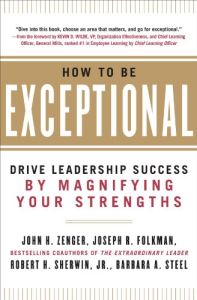
How to Be Exceptional

Drive Leadership Success By Magnifying Your Strengths

McGraw-Hill,

15 min read
10 take-aways
Audio & text

What's inside?

Do you have to be a “born leader” to lead? Not at all.

Editorial Rating

8

getAbstract Rating

  • Innovative
  • Applicable

Recommendation

If you’ve ever heard someone praise an executive as a “born leader,” you might wonder if anyone is really born to lead. Not really, according to leadership development consultants John H. Zenger, Joseph R. Folkman, Robert H. Sherwin Jr. and Barbara A. Steel, whose extensive research includes data on 27,000 executives. The authors calculate that approximately 32% of leadership ability is genetically based and that the other 68% depends on other factors, such as developing the skills that leadership requires. The authors explain how their research substantiates the merits of “strengths-based” leadership development and cover how that works and what it can accomplish in building leaders for your organization. While this dense, knowledgeable report is sometimes repetitive, the authors offer useful, convincing expertise and information. getAbstract recommends their guidance to all those who want to become “exceptional leaders” and to organizations that want to foster great leadership.

Summary

Are You an “Exceptional Leader”?

Exceptional leaders are absolutely essential to an organization’s success, but what makes leaders exceptional? Leaders in this category have three to five identifiable, outstanding leadership strengths. Unfortunately, a “fatal flaw” – a negative behavior that impedes a leader’s effectiveness – can undermine even good managers. Therefore, before undertaking self-improvement, leaders must eliminate flaws that can have a devastating impact on the perception of their overall effectiveness.

The steps to fixing a fatal flaw are hard but effective: acknowledge and understand the flaw, set up a “measurable” program for change, say you are sorry to anyone you’ve harmed and ask forgiveness, request assistance, and give yourself an award when you succeed. After addressing fatal flaws, focus on your biggest strengths and work hard to improve them.

Even if you have no single, particular area of excellence, you can become a more effective leader if you build one profound strength. People who lack leadership strengths but who work to become great in one area generally move from around the bottom third to near the top third in leadership excellence...

About the Authors

John H. Zenger and Joseph R.  Folkman wrote The Inspiring Leader and The Extraordinary Leader. They cofounded Zenger Folkman, where Robert H. Sherwin Jr. is COO and Barbara A. Steel is senior vice president of leadership effectiveness.


Comment on this summary

  • Avatar
  • Avatar
    M. F. 6 months ago
    For learned behaviours and excellence, see also Bounce, by Matthew Syed:
    https://www.getabstract.com/en/summary/bounce/16350
  • Avatar
    C. W. 6 months ago
    While I do believe that many great leaders are born that way, I do see there is a path for anyone to lead.
  • Avatar
    A. F. 6 months ago
    As an introvert who does not see herself as a leader, I found this article very interesting. The thought that developing even one of the mentioned strengths can really make a difference seems very optimistic. It is also comforting that 68% of leadership abilities depend on skill development, while only 32% is genetically determined.

More on this topic

Related Skills

AI Transformation
Be Emotionally Intelligent
Become More Adaptable
Career
Communicate Effectively
Future of Work
Foster Team Culture
Human Resources
Innovation
Lead Ethically
Leverage AI for HR
Leverage AI in Your Daily Tasks
Place Talent Strategically
Plan Your Career
Understand Innovation
Understand Organizations
Workplace Skills
Build Confidence
Coach People
Create Career Pathways
Drive Team Performance
Manage Learning and Development
Communicate Strategically
Enhance Your Skill Set
Leverage AI for Leadership
Use AI for Coaching and Development
Develop Team Members
Personal Growth
Practice Servant Leadership
Cultivate a Growth Mindset
Use AI for Learning and Upskilling
Identify Your Development Needs
Leverage Social Learning
Master Interpersonal Skills

Create Learning Experiences
Develop Self-Awareness
Executive Leadership
Understand Learning
Practice Humility
Practice Transformational Leadership
Use AI for Learning & Development
Develop Leaders
Develop Self-Mastery
Become a Self-Driven Learner
Overcome Challenges
Manage Your Leadership Impact
Navigate Leadership Challenges
Emerging Leadership Approaches
Executive Leadership Case Studies
Become a Mentee
Manage People and Talent
Understand Leadership Approaches
Implement Executive Coaching
Lead Yourself
Advance Your Career
Advance as a Woman Leader
Assess Your Skillset
Learn from Experience
Pursue Lifelong Learning
Support Team Members’ Careers
Promote a Learning Culture
Understand Organizational Learning
Identify Skills Gaps
Provide Feedback
Leadership
Soft Skills
Develop Your Thinking Skills

Adopt a Learning Habit
Leverage Your Strengths

Mentor Employees
Identify Your Strengths
Be Coachable
Lead Strategically
Learn from Feedback
Understand Yourself