
Melden Sie sich bei getAbstract an, um die Zusammenfassung zu erhalten.
Melden Sie sich bei getAbstract an, um die Zusammenfassung zu erhalten.
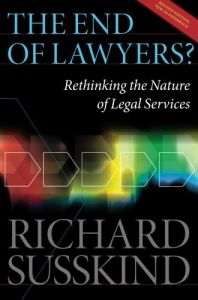
Richard Susskind
The End of Lawyers?
Rethinking the Nature of Legal Services
Oxford UP, 2010
Was ist drin?
The Internet and parsimonious clients will push many lawyers out of the law. Here’s how to stay in the game.


Zusammenfassung verfügbar: weltweit
Recommendation
Iconoclastic British lawyer Richard Susskind looks squarely at his profession and reports on its gross inefficiencies, outrageous fees and absurd structures. For Susskind’s honesty, senior members of the prestigious Law Society of England and Wales have suggested that he not be permitted to speak in public. This would be a notable loss. Susskind’s voice is witty and engaging, and his message is important. As an author, he does not offer a grand unified theory on what lawyering will look like in the years to come. Instead, writing with panache, he presents a “buffet of likely options for the future,” including trends in the US as well as the UK. Susskind’s drollness makes his book a delight to read. For example, he claims that most lawyers now accept his views on future trends for legal practice, having moved through these four stages: 1) “This is worthless nonsense”; 2) “This is an interesting, but perverse, point of view”; 3) “This is true, but quite unimportant”; and 4) “I always said so” – in accord with biologist J.B.S. Haldane’s “four stages of acceptance.” getAbstract suggests that law students, attorneys and the executives who pay them will benefit from reading Susskind’s entertaining, thought-provoking book.
Summary
About the Author
Author and consultant Richard Susskind is IT adviser to the Lord Chief Justice of England and Wales. He is also visiting professor at the Oxford Internet Institute at Oxford University and emeritus professor at Gresham College London. Susskind wrote The Future of Law.


Comment on this summary