
Melden Sie sich bei getAbstract an, um die Zusammenfassung zu erhalten.
Melden Sie sich bei getAbstract an, um die Zusammenfassung zu erhalten.
Charles R. Geisst
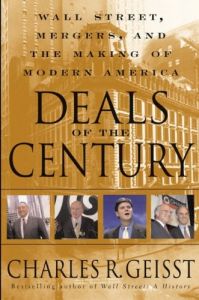
Deals of the Century
Wall Street, Mergers, and the Making of Modern America
Wiley, 2003
Was ist drin?
The mega-mergers of the twentieth century prove that at least one axiom is true: the rich did get extremely richer.


Zusammenfassung verfügbar: weltweit
Recommendation
For all the headlines they grab, mega-mergers typically aren’t a good deal for anyone but corporate executives and investment bankers. And guess what? This was just as true when J.P. Morgan created U.S. Steel in 1901 as it was when Steve Case engineered the AOL-Time Warner merger in 1999. Financial expert Charles R. Geisst dissects a century’s worth of deals in fascinating detail. His conclusion: investor and regulator beware. Geisst’s accessible style is a plus, and he manages to be skeptical but not jaundiced in this thorough, clear-eyed analysis. getAbstract.com suggests this book to any executive contemplating an M&A deal, and to any investor trying to cut through the hype surrounding mergers.
Summary
About the Author
Financial expert Charles R. Geisst has written 14 books, including bestsellers Wall Street: A History and 100 Years of Wall Street. Geisst worked as an analyst and investment banker at several investment banks in London. He has written for the International Herald Tribune, The Wall Street Journal and other publications.

Comment on this summary