
Melden Sie sich bei getAbstract an, um die Zusammenfassung zu erhalten.
Melden Sie sich bei getAbstract an, um die Zusammenfassung zu erhalten.
Robert G. Eccles, Robert H. Herz, E. Mary Keegan and David M. H. Phillips
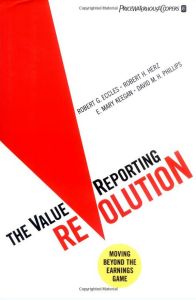
The ValueReporting Revolution
Moving Beyond the Earnings Game
Wiley, 2001
Was ist drin?
PricewaterhouseCoopers has joined with getAbstract to produce the Abstract of the new book The ValueReporting Revolution. An unapologetic critique of current corporate reporting and valuation techniques.


Zusammenfassung verfügbar: weltweit
Recommendation
The words “compelling” and “accounting” are seldom used in tandem, but there is no other way to describe this call to arms written by a former Harvard Business School professor and three accountants from PricewaterhouseCoopers. The book, which is framed as a manifesto for change in the world of corporate reporting, is written in un-accountant-like language bordering on the subversive. Its main message: Traditional corporate reporting practices are inadequate because they don’t capture the market information and the non-financial measures that drive value. Investors rely too heavily on short-term financial results, which contributes to unprecedented volatility in global equity markets. The authors’ remedy? Disclosure of more and better information. This new model is presented in such detail that executives could use it as a blueprint in building new corporate reporting regimens. But you needn’t be a corporate leader to appreciate the far-reaching implications of this book, which getAbstract recommends to all professionals as a – yes – compelling analysis of the current practice and evolving future of corporate reporting and its standards, pivotal benchmarks in the global economy.
Summary
About the Authors
Robert G. Eccles is President of Advisory Capital Partners and a Senior Fellow of PricewaterhouseCoopers.Robert H. Herz is a Partner at PricewaterhouseCoopers based in the United States. E. Mary Keegan and David M. H. Phillips are Partners at PricewaterhouseCoopers based in the United Kingdom. “

Comment on this summary