
Melden Sie sich bei getAbstract an, um die Zusammenfassung zu erhalten.
Melden Sie sich bei getAbstract an, um die Zusammenfassung zu erhalten.
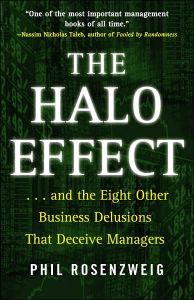
Phil Rosenzweig
The Halo Effect
...and the Eight Other Business Delusions That Deceive Managers
Free Press, 2007
Was ist drin?
How the usual way companies measure success leads managers astray – and what sustained success really looks like.


Zusammenfassung verfügbar: weltweit

Recommendation
This serious book will change the way many people think about the pursuit of managerial excellence and, indirectly, about the criteria they use for managing and (coincidentally) investing. Phil Rosenzweig provocatively challenges prevailing concepts about the traits that drive corporate performance. He asks revealing questions about previous research assumptions that labeled companies "excellent." It seems that earlier accolades about "the best" companies - including the claims in some blockbuster books - were based on faulty research techniques that led authors to mistakenly attribute achievements to companies that did not accomplish them or could not sustain them. Rosenzweig distills his compelling ideas clearly, and buttresses his case with specific examples and original research, adding to the book's power. As a result, getAbstract would compare this very readable, focused book to fine brandy: palatable, enjoyable, memorable, a little heavy - and imbued with the potential to change your mind. Highly recommended.
Summary
About the Author
Phil Rosenzweig, Ph.D., is a professor at IMD, the International Institute for Management Development, in Lausanne, Switzerland. He holds a Ph.D. from the Wharton School, University of Pennsylvania, and taught at the Harvard Business School.

Comment on this summary