
Melden Sie sich bei getAbstract an, um die Zusammenfassung zu erhalten.
Melden Sie sich bei getAbstract an, um die Zusammenfassung zu erhalten.
Daniel E. O Leary
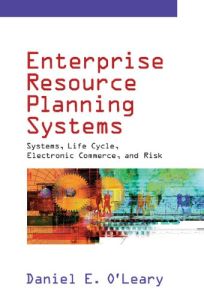
Enterprise Resource Planning Systems
Systems, Life Cycle, Electronic Commerce and Risk
Cambridge UP, 2000
Was ist drin?
If you have to ask what ERP is, you can’t afford it. (It’s Enterprise Resource Planning and it’s for the leaders of really, really big companies who wish that everything would work in sync and who have the money to make their wishes come true.)


Zusammenfassung verfügbar: weltweit
Recommendation
Because this is a dense read, you won’t be surprised to learn that the author, Daniel E. O’Leary, is a Ph.D. If you don’t have a conversational grasp of acronyms - including, but not limited to ERP, LAN, WAN, SMEs BOPSE, MAPs, SAP and BAAN - then you’ll have to decode as you read. If you’re actually interested in using the business resource known as "Enterprise Resource Planning," or ERP, your company should be grossing some $200 million a year, because ERP costs about $15 million to implement. While O’Leary makes a very compelling case in favor of ERP, citing integration of information infrastructure, real-time data, value creation and other wonderful attributes, this is a very expensive and risky resource to pursue. Companies such as Microsoft and Cisco had a hard time implementing it and even they have to worry about cost getAbstract warns that this is serious tech for Big Money companies. Mom and Pop operations need not apply.
Summary
About the Author
Daniel O’Leary received his Ph.D. from Case Western Reserve University and his MBA from the University of Michigan. He is a professor in the Marshall School of Business at the University of Southern California. He has published over 120 papers in a variety of computer science, information systems and management science journals.

Comment on this summary