
Join getAbstract to access the summary!
Join getAbstract to access the summary!
Stuart Crainer
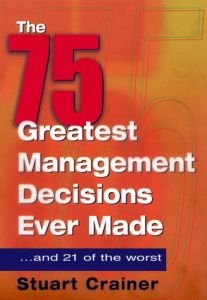
The 75 Greatest Management Decisions Ever Made
...and 21 of the Worst
AMACOM, 1999
What's inside?
A list to which all managers can aspire!


Zusammenfassung verfügbar: weltweit
Recommendation
Great authors, historians, musicians, and sports stars are usually included in end of the year "best" lists. Managers rarely show up on such lists. This book highlights 75 history-making management decisions that changed the way we think, live, and work. The decisions profiled remind executives that great management requires experience, vision, the ability to take risks, and good luck. This entertaining volume also covers 21 truly mistaken management decisions, a valuable contrast. getAbstract recommends this book to executives and managers who would like to be able to recount colorful war stories about some ups and downs in the evolution of management.
Summary
About the Author
Stuart Crainer, a business and management writer, contributes to a number of leading business publications including The Financial Times, Across the Board and The Times of London. He has written many books including The Ultimate Business Library, The Ultimate Book of Business Quotations, and The Ultimate Book of Business Gurus. He lives near Oxford, England.

Comment on this summary