
Melden Sie sich bei getAbstract an, um die Zusammenfassung zu erhalten.
Melden Sie sich bei getAbstract an, um die Zusammenfassung zu erhalten.
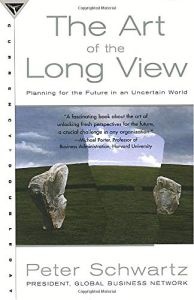
Peter Schwartz
The Art of the Long View
Planning for the Future in an Uncertain World
Currency, 1996
Was ist drin?
Do you want to build a successful future? Build a few scenarios first.


Zusammenfassung verfügbar: weltweit
Recommendation
Peter Schwartz evidences charming honesty and humility about his experiences building scenarios. He learned from his failures, so he includes them, as well as his rather impressive successes. Schwartz emphasizes that scenario planning is not the same thing as predicting the future and that complete accuracy is not the goal. Yet, it is still striking how accurately his 1991 scenarios played out. He may have missed a few specific events and trends but, if you’d based your actions on his scenarios, you would have been well-equipped for the last two decades. His very useful principles of scenario planning and multisource information gathering have not changed since he delineated them. The result is a classic. getAbstract recommends this book to entrepreneurs, organizational decision makers and anyone interested in strategic planning, futurism or change.
Summary
About the Author
Peter Schwartz is a futurist, the co-founder of the Global Business Network and the author of Inevitable Surprises and When Good Companies Do Bad Things, among other books.



Comment on this summary