
Join getAbstract to access the summary!
Join getAbstract to access the summary!
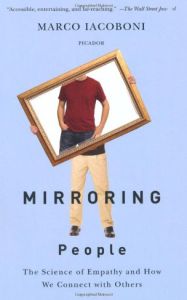
Marco Iacoboni
Mirroring People
The Science of Empathy and How We Connect with Others
Picador, 2008
What's inside?
When you smile, I smile. When you move, neurons fire in my brain. We are not atomized individuals.


Zusammenfassung verfügbar: weltweit
Recommendation
In this fascinating book, Marco Iacoboni wordily explains his research into mirror neurons, generally in language that laypeople can understand. He convincingly issues a challenge to the individualistic foundations of Western thought. People imitate one another, Iacoboni argues, on a neurological level: Their brains respond to the actions of others, almost as though they were doing those actions themselves. What’s more, different levels of neural activity occur depending on context and purpose. The human world is social, and each person’s actions have immediate, neurological implications for everyone else. Because of the number of fields Iacoboni touches on, and the broad implications mirror neurons have for society, getAbstract recommends his book to readers who are interested in communication, advertising, cognitive science and philosophy.
Summary
About the Author
Marco Iacoboni directs the Transcranial Magnetic Stimulation Laboratory at the Ahmanson-Lovelace Brain Mapping Center at the University of California Los Angeles.

Comment on this summary