
Melden Sie sich bei getAbstract an, um die Zusammenfassung zu erhalten.
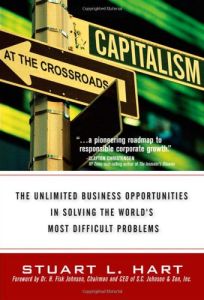
Melden Sie sich bei getAbstract an, um die Zusammenfassung zu erhalten.
Stuart L. Hart
Capitalism at the Crossroads
The Unlimited Business Opportunities in Solving the World's Most Difficult Problems
Wharton School Publishing, 2005
Was ist drin?
Socially responsible capitalism aimed at sustainable development could both make money and save the world.


Zusammenfassung verfügbar: weltweit
Recommendation
This interesting and provocative book synthesizes several of the most influential ideas in modern business and distills a new idea: that disruptive innovation at the bottom of the pyramid will solve the crises of environmental pollution, business stagnation and international terrorism at the top. No one can accuse author Stuart L. Hart of thinking small or of lacking imagination. His big ideas are all in place. The only missing element, as he freely admits, is one small detail: how. Capitalism must take a new course, and it's pretty clear what the new course must be, but Hart presents only a vague notion of how businesspeople are to go about turning his vision into reality. getAbstract.com recommends that business leaders read this book anyway, because it will stimulate your thinking about what might be possible. Maybe you'll be the one to figure out how to make the difference.
Summary
About the Author
Stuart L. Hart is S. C. Johnson Chair of Sustainable Global Enterprise and Professor of Management at Cornell's Johnson Graduate School of Management.

Comment on this summary