
Melden Sie sich bei getAbstract an, um die Zusammenfassung zu erhalten.
Melden Sie sich bei getAbstract an, um die Zusammenfassung zu erhalten.
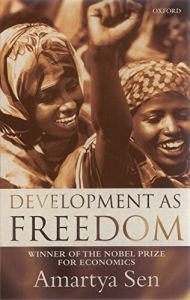
Amartya Sen
Development as Freedom
Oxford UP, 2001
Was ist drin?
Development can counter deprivation, if it is based on freedom and on building individual capabilities.


Zusammenfassung verfügbar: weltweit
Recommendation
Nobel Prize-winning economic scientist Amartya Sen attempts to popularize a series of lectures he presented to executives at the World Bank in 1996. He challenges traditional economic theories to justify a more aggressive, humane and generous funding formula to benefit the world’s poorest nations. This goal is based on his theory about individual capabilities and functionings, and how they affect opportunity, both person by person and in a society. Even though this is aimed for general discussion rather than Ph.D. course work, it is an extremely daunting book to read, a mental maze land mined with quirky thoughts and a thick lexicon only an academic could love. More thesis than not, the text is 298 pages plus 60 pages of small type footnotes. The short version: the rich get richer and the poor remain deprived of abilities and awaiting enlightened development. getAbstract recommends this dense, challenging but important book to insomniacs, liberal world bankers, economic policy makers, the Kofi Annan fan club and students of economic science.
Summary
About the Author
Amartya Sen won the Nobel Prize for economic science in 1998. He is past president of the Indian Economic Association, The American Economic Association, the International Economic Association and the Econometric Society. He has taught at Calcutta, Delhi, Oxford, Cambridge, Harvard and the London School of Economics. He is the master of Trinity College, Cambridge.

Comment on this summary