
Melden Sie sich bei getAbstract an, um die Zusammenfassung zu erhalten.
Melden Sie sich bei getAbstract an, um die Zusammenfassung zu erhalten.
Daniel Litvin
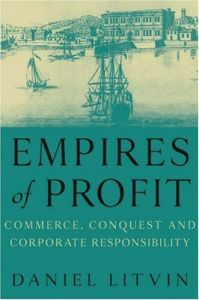
Empires of Profit
Commerce, Conquest and Corporate Responsibility
Thomson Texere, 2003
Was ist drin?
Even when multinational corporations try to make a difference in undeveloped nations, they develop mostly trouble.


Zusammenfassung verfügbar: weltweit
Recommendation
If you ever wanted to belly up to the bar with a foreign correspondent, share a cold beer and swap war stories, this is your chance. Daniel Litvin, a former journalist, as well as a former corporate social responsibility (CSR) officer, shares a book full of corporate adventures from the foreign battlefields of business. In this very anecdotal examination of how the arrival of first world companies affects local societies and governments - for good or ill - in third world countries, he sews stories and history together from India to Guatemala to Iran to Manchuria to Africa. He lists the past misdeed of Aramco oil companies in Arabia, of Shell in Nigeria and of Nike’s far flung contractors, seeming to say that they meant no real harm and did less harm than they were accused of doing, but he also contrasts the flawed past with the improved present. Even with responsible policies, he says, multinationals most often fail because they create unexpected dynamics and impossible expectations. getAbstract.com recommends this fiscal, social and corporate travelogue to executives, corporate social responsibility officers and field personnel far from home.
Summary
About the Author
Daniel Litvin is the former Corporate Social Responsibility agent for Rio Tinto plc, a mining multinational, where he specialized in human rights policy. A former, prize-winning environment and resources correspondent for The Economist, he is a graduate of the London School of Economics and Oxford University, with degrees in anthropology and development, philosophy, politics and economics. He lives in London.

Comment on this summary