
Melden Sie sich bei getAbstract an, um die Zusammenfassung zu erhalten.
Melden Sie sich bei getAbstract an, um die Zusammenfassung zu erhalten.
Charles Perrow
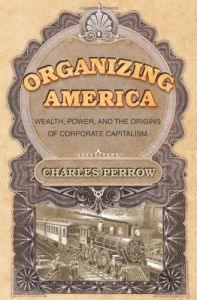
Organizing America
Wealth, Power, and the Origins of Corporate Capitalism
Princeton UP, 2002
Was ist drin?
Though the founders did not guess that many Americans would work for big companies, they were already wary of big power.


Zusammenfassung verfügbar: weltweit
Recommendation
You may never have given a second thought to the very existence of the Fortune 500, but author and academic Charles Perrow has. In this eye-opening sociological account, he argues that the huge organizations that dominate today’s business world in the United States would have been unthinkable to the nation’s Founding Fathers, who viewed centralized money and power with great suspicion. Perrow’s fascinating study points out the importance of big organizations in shaping American society. Yet for all his sweeping - and well-reasoned - arguments, Perrow focuses only on a couple of diminished industries. Still, this intriguing work is an important read for responsible corporate citizens. getAbstract.com recommends this social history to those leaders who want American corporations to be more than profit-making machines.
Summary
About the Author
Charles Perrow is a research scholar and professor emeritus of sociology at Yale University. His six other books include Complex Organizations and Normal Accidents: Living with High-Risk Technologies. Perrow is an organizational theorist who studies the effects of large organizations on society.

Comment on this summary