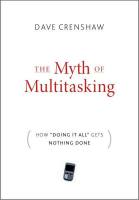
No more multitasking: Contrary to common belief, doing several things at once is not the most efficient way to work
In this summary you will learn
- Why the idea that multitasking works is misleading
- How to deal with constant, active or passive interruptions at work
- How to use your time productively without “switchtasking.”
getAbstract rating
| getAbstract rating |
Applicability |
|
Innovation |
|
Style |
|
| Level of Expertise |
Why you should read The Myth of Multitasking
Dave Crenshaw has managed to stretch a clear, simple concept into an entire book, but it is a useful, helpful concept. Crenshaw debunks the myth that multitasking can be effective and advocates focusing on one task at a time instead. He teaches this lesson by telling the story of a gifted business coach, Phil, and his stressed-out client, Helen. He uses the format of a business novel to demonstrate that multitasking is not an efficient way to get things done. Every time a person changes from one task to another, which Crenshaw calls “switchtasking,” he or she loses time and focus. The remedy, the author explains, is to cut down on interruptions, manage how you allocate your time and concentrate on a single task at a time. This is not exactly a groundbreaking theory in time management, but it is certainly a helpful reminder. getAbstract suggests this book to managers who must help employees handle their time and to people who need guidance to quit multitasking so they can actually get things done.
About the Author
Dave Crenshaw has coached business executives for the past decade. A frequent keynote speaker, he founded the Fresh Juice Strategy program.
Do you like this summary?
Customers who read this summary also read
-
18 Minutes
Find Your Focus, Master Distraction, and Get the Right Things Doneby Peter Bregman
-
Carrots and Sticks
by Ian Ayres
-
Earn What You're Really Worth
by Brian Tracy
-
Make Every Second Count
by Robert W. Bly