
Join getAbstract to access the summary!
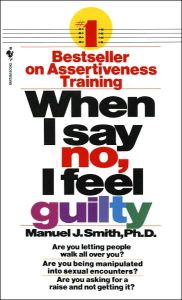
Join getAbstract to access the summary!
Manuel J. Smith
When I Say No, I Feel Guilty
Doubleday Broadway, 1985
What's inside?
This classic manual explains how to become empowered and how to assert yourself to get what you want in every situation.


Summary availability: Worldwide except Antigua and Barbuda, Australia, Bahamas, Bangladesh, Barbados, Belize, Botswana, Brunei Darussalam, Cameroon, Cyprus, Dominica, Fiji, Gambia, Ghana, Grenada, Guyana, India, Jamaica, Kenya, Kiribati, Lesotho, Malawi, Malaysia, Maldives, Malta, Mauritius, Mozambique, Namibia, Nauru, New Zealand, Nigeria, Pakistan, Papua New Guinea, Saint Kitts and Nevis, Saint Lucia, Saint Vincent and the Grenadines, Samoa, Seychelles, Sierra Leone, Singapore, Solomon Islands, South Africa, Sri Lanka, Swaziland, Tanzania, United Republic of, Tonga, Trinidad and Tobago, Tuvalu, Uganda, United Kingdom, Vanuatu, Zambia
Recommendation
Take a trip back to the 1970s, when leisure suits, long sideburns and “assertiveness training” were all the rage. Psychologist Manuel J. Smith was a pioneer in the life-changing assertiveness training movement. Reading his bestseller about it decades later adds a new perspective. Some of his advice still feels relevant, particularly when he urges you to beware of those who try to impose their standards of “right” and “wrong” to manipulate you. Smith lists your 10 “assertive rights,” the most important being the right to be the ultimate judge of your own behavior. He details several verbal techniques you can use to block manipulation, and encourage productive communication and negotiation. He supports each tactic with sample dialogues from real-life situations. Although some of his counsel may seem as dated as disco, getAbstract recommends his classic training manual to anyone who still feels guilty about saying “no!”
Summary
About the Author
Manuel J. Smith, Ph.D., is a clinical-experimental psychologist and the author of Yes, I Can Say No. His work has appeared in numerous professional and scientific publications, including the Journal of Experimental Psychology and Psychology Report.

Comment on this summary