getAbstract

Home | Knowledge Packs | Travel Packs |
Blog | RSS Feeds | Free Summaries

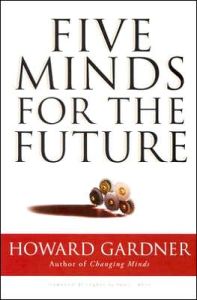
Five Minds for the Future

by Howard Gardner

Harvard Business Review Press, 2007

Category: Concepts & Trends

Get the summary
Five Minds for the Future

getAbstract rating

Overall (?)

rating 8 (8)

Applicability

rating 8 (8)

Innovation

rating 9 (9)

Style

rating 7 (7)

Level of Expertise (?)

rating 2 (2)

User rating (1 comment)

  (2 ratings)

In this summary you will learn

  • What five cognitive abilities everyone should master
  • Why they are important
  • How to cultivate them

Why you should read Five Minds for the Future

Howard Gardner is a man of many minds. The Harvard psychologist, MacArthur “genius grant” recipient and prolific author started a revolution when he claimed that human capability couldn’t be reduced to a single metric. Rather than accepting IQ as the whole story of cognitive capacity, Gardner said people have “multiple intelligences,” a notion he popularized in his 1983 book Frames of Mind: The Theory of Multiple Intelligences. Twenty-five years later, Gardner is still producing influential work on human mental skills and capabilities. In this clear, eminently useful book, Gardner describes five cognitive capacities that he predicts will be in most demand in the future and which everyone should practice. While he describes them metaphorically as “minds,” these forms of thought are neither wholly innate nor immutable. All people can, through diligent practice, cultivate their disciplined mind, their synthesizing mind, their creative mind, their respectful mind and their ethical mind – and they should. Given accelerating technological change and vast increases in the flow of information and the necessity of working closely with many different kinds of people worldwide, getAbstract is of a mind to recommend this book to managers who are trying to think ahead.

About the Author

Howard Gardner is the John H. and Elisabeth A. Hobbs Professor of Cognition and Education at the Harvard Graduate School of Education.

Comment on this summary     Sign in to share your opinion

JONATHAN MERRITT January 7, 2011

Very good subject, important and interesting. However, a bit vague in the descriptions and the strategies to improve the 5 areas of cognition mentioned. Some refrences to specifics in psychology would help and specific, or even made up, examples would really help bring this to life and make it much more practical and applicable book for peoples lives.