
Melden Sie sich bei getAbstract an, um die Zusammenfassung zu erhalten.
Melden Sie sich bei getAbstract an, um die Zusammenfassung zu erhalten.
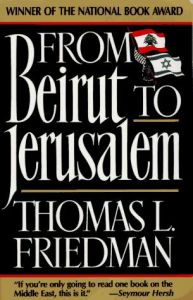
Thomas L. Friedman
From Beirut to Jerusalem
FSG, 1995
Was ist drin?
“Life can no longer deal you many shocks after you’ve lived in Beirut.”


Summary availability: Worldwide
Recommendation
If journalism is the first rough draft of history, Friedman’s version may require only a light edit from future generations. Concisely cutting through the relentless pattern of attack and counter-attack that has characterized the Middle East for more than 50 years, Friedman finds a balance between seemingly bloodthirsty enemies. He delves into the cultural development of the peoples of the region from tribal origins, analyzing how their early struggles for survival color current events. getAbstract.com recommends this book as essential reading for any thoughtful person who wants to better understand the historical obstacles to peace in the Middle East.
Summary
About the Author
Thomas L. Friedman served as Beirut correspondent for United Press International from 1979 to 1981, when he became bureau chief for The New York Times. He has won two Pulitzer Prizes and a National Book Award. Also the author of the highly regarded volume, The Lexus and The Olive Tree, Friedman is currently foreign affairs columnist on the New York Times’ Op Ed page. He lives in the Washington, D.C., area with his wife and two daughters, Orly and Natalie.

Comment on this summary