
Join getAbstract to access the summary!
Join getAbstract to access the summary!
Daniel Gilbert
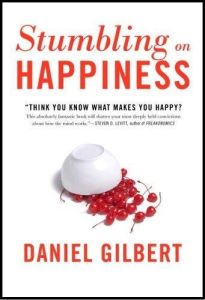
Stumbling on Happiness
Knopf, 2006
What's inside?
So often you are your own worst enemy when you plan for the future. You're not alone; it's the human condition.


Summary availability: Worldwide except Antigua and Barbuda, Australia, Bahamas, Bangladesh, Barbados, Belize, Botswana, Brunei Darussalam, Cameroon, Cyprus, Dominica, Fiji, Gambia, Ghana, Grenada, Guyana, India, Jamaica, Kenya, Kiribati, Lesotho, Malawi, Malaysia, Maldives, Malta, Mauritius, Mozambique, Namibia, Nauru, New Zealand, Nigeria, Pakistan, Papua New Guinea, Saint Kitts and Nevis, Saint Lucia, Saint Vincent and the Grenadines, Samoa, Seychelles, Sierra Leone, Singapore, Solomon Islands, South Africa, Sri Lanka, Swaziland, Tanzania, United Republic of, Tonga, Trinidad and Tobago, Tuvalu, Uganda, United Kingdom, Vanuatu, Zambia
Recommendation
You, like most people, have probably made poor decisions regarding the future. For proof of human folly, you have only to look at the large number of divorces, jobs walked away from, failed start-up businesses and attics filled with junk someone "had to buy." Families regret their goofy vacations – then take the same awful trips the following year. And the observers who ask, "What could they possibly have been thinking?" make the same sorts of mistakes in their own lives. As a Yiddish proverb says, "Mann tracht und Gott lacht" – "Man plans and God laughs." So what's going on? Why are people such poor prognosticators? Psychologist Daniel Gilbert explains, with great wit, that the human imagination, along with the other cognitive abilities people use to forecast happiness, are fatally flawed. Based on extensive psychological research, his book posits that, regarding life's future milestones, most people would do better asking someone else what to do rather than making their own decisions. getAbstract recommends this book to managers responsible for planning strategy and tactics, and to anyone else who wonders why he or she so often gets it totally wrong.
Summary
About the Author
Daniel Gilbert teaches psychology at Harvard. He is a pioneer in the research of "affective forecasting" – the forecasting of one's emotional state in the future.

Comment on this summary