

Join getAbstract to access the summary!
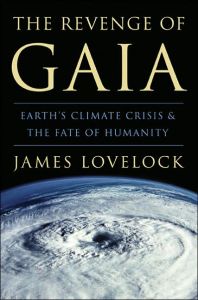
Join getAbstract to access the summary!
James Lovelock
The Revenge of Gaia
Earth's Climate Crisis & the Fate of Humanity
Basic Books, 2006
What's inside?
An alarming report on global warming: Think the recent "extreme" weather has been terrible? You haven't seen anything yet.


Recommendation
James Lovelock, an eminent scientist and innovative thinker, is best known for his "Gaia Hypothesis," named after the Greek goddess of the Earth. This proposes that all parts of the Earth – living and nonliving – function together in a complex, interdependent system that can be viewed as a "living entity." Lovelock contends that our Earth, "Gaia," is very ill and, alarmingly, will become even sicker due to the effects of global warming. He contends that the nations of the Earth must immediately institute a series of drastic actions to reduce carbon emissions and the other greenhouse gases that contribute to global warming; and that they quickly must take other vital steps to protect the environment. According to Lovelock, if the Earth's people do not take these long-overdue actions, civilization will most possibly perish and, as he grimly puts it, the Earth will become a savage world ruled by "brutal warlords." Lovelock's book is a crucial wake-up call for the planet and life upon it. getAbstract suggests that you read this book to learn about the horrors that may – and the author reports very likely will – occur without immediate action to slow global warming and mitigate its dangerous effects. Forewarned is forearmed.
Summary
About the Author
James Lovelock is a scientist, environmentalist and futurist. He developed the "Gaia Hypothesis." Lovelock lives in ancient Cornwall in Great Britain.


Comment on this summary