
Join getAbstract to access the summary!
Join getAbstract to access the summary!
Charles R. Geisst
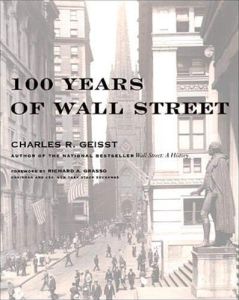
100 Years of Wall Street
McGraw-Hill, 2000
What's inside?
A century of bulls, bears, booms, busts, and even bucket shops: a visual and verbal journey down the street that (they say) is paved with gold.


Summary availability: Worldwide
Recommendation
Charles R. Geisst’s enjoyable book chronicles Wall Street in the 20th century. He effectively captures the feel of the various boom and bust periods. The clear, informative text is supplemented with incredible black and white photographs of each period’s key events and people, making it very evocative and intriguing. getAbstract recommends this book to anyone – not only someone in business – who wants to learn about Wall Street’s history. It would make a great gift for anyone who works in the financial industry or for a young person who is interested in how money works.
Summary
About the Author
Charles R. Geisst’s previous book, Wall Street: A History, was a New York Times Business Bestseller in 1977. It was a selection of the History Book Club and the Book-of-the Month Club International. Geisst, formerly a capital markets analyst and investment banker in London, is also an experienced financial consultant for banks. The author of eleven other books, he has also published widely in professional journals and news magazines.

Comment on this summary