
Join getAbstract to access the summary!
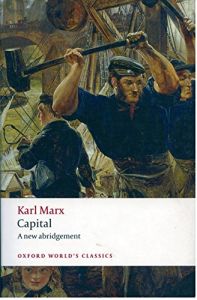
Join getAbstract to access the summary!
Karl Marx
Capital
Oxford UP, 1999
What's inside?
The Marxist bible: In his economic masterwork, Karl Marx details capital accumulation and the exploitation of the proletariat.


Summary availability: Worldwide
Recommendation
Karl Marx’s technical masterpiece painstakingly, and often dramatically, roots out the causes of social and economic inequality. Unlike The Communist Manifesto, which he wrote with Friedrich Engels, this classic text is not a call to revolution but rather a comprehensive and systematic analysis and “critique of political economy,” according to its original subtitle. Marx spent 15 years working on just the first volume of his complex masterwork. In it he details the “surplus value” that workers create for those who own the “means of production,” and how exploitative capitalists sell their goods not to purchase other goods, but to increase their own wealth. “Money making money,” or the capital accumulation process, lies at the heart of Marx’s critique of capitalism. getAbstract recommends his seminal work to those who wish to understand the origins of this important, disruptive work of political and economic philosophy.
Summary
About the Author
Karl Marx, born in Trier, Germany, in 1818, studied law, philosophy and history, and worked as an editor for a liberal newspaper. Censored for his views, he moved to France and met the son of a factory owner, Friedrich Engels, with whom he wrote The Communist Manifesto in 1847. In 1849, Marx went into exile to London, where he began an intensive study that resulted in his masterpiece of political economics, Capital. The first volume was published in 1867; the second and third volumes were published after he died in England in 1883.

Comment on this summary