
Join getAbstract to access the summary!
Join getAbstract to access the summary!
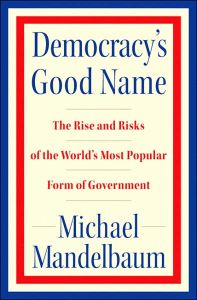
Michael Mandelbaum
Democracy's Good Name
The Rise and Risks of the World's Most Popular Form of Government
Public Affairs, 2007
What's inside?
As the world becomes wealthier, it becomes more democratic.


Summary availability: Worldwide
Recommendation
Michael Mandelbaum looks at the complex political concepts and historical forces that shaped the rise of modern democratic nations. He explicates the origins of modern democracy and how it is changing in today’s globally interconnected world, and explains the relationships between historical and current events. Although you may not agree with some of his assumptions – about the interdependence of free markets and democracy, for example – his book is thought-provoking and illuminating. getAbstract recommends it to managers and executives whose responsibilities cross borders, and to history buffs and others who wish to understand current political developments.
Summary
About the Author
Michael Mandelbaum is the Christian A. Herter Professor of American Foreign Policy at the Johns Hopkins University School of Advanced International Studies in Washington, D.C. He is the author of 10 books, including The Ideas That Conquered the World and The Case for Goliath.

Comment on this summary