
Join getAbstract to access the summary!
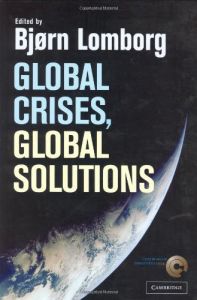
Join getAbstract to access the summary!
Bjørn Lomborg
Global Crises, Global Solutions
Cambridge UP, 2004
What's inside?
Can risk-benefit analysis change the world and help fight climate change, disease, war, corruption and hunger?


Summary availability: Worldwide
Recommendation
This report is an excellent, controversial and refreshing approach to global problems. Daily, the news media and politicians declare that another crisis is urgent. Often, loud, public resolutions accompany these pronouncements. Political blocs form to push through agendas based on those resolutions. The only thing missing from the process is a dispassionate analysis of whether the solutions make economic sense and, if so, which ones make the most economic sense. This book of compiled essays from the Copenhagen Consensus - as documented in The Economist - provides that missing element. The conference drew from United Nations documents to assemble a list of the most urgent problems facing the world and identified those that presented opportunities for solutions. Then it set the task of identifying solutions that would provide the biggest benefit for the cost, examining 38 proposals for spending $50 billion over four years. Surprisingly, some of the most economically rational projects never make headlines and never turn up in public exhortations. When was the last time you saw someone climbing onto a platform to demand mosquito nets to prevent malaria in Africa? That may not come up nearly as often as adherence to the Kyoto Protocol, which provides a far weaker cost vs. benefit scenario. According to the analysts from Copenhagen, the former seems to be a very sound use of the world’s problem-solving resources, but the latter costs a lot and seems to deliver relatively few benefits. getAbstract.com highly recommends this intriguing, sweeping conversation.
Summary
About the Author
Bjørn Lomborg is Associate Professor of Statistics at the University of Aarhus, and former Director of the Environmental Assessment Institute, Copenhagen. Listed as one of the world’s most influential people by TIME magazine, he is author of The Skeptical Environmentalist.

Comment on this summary