
加入 getAbstract 阅读摘要
加入 getAbstract 阅读摘要
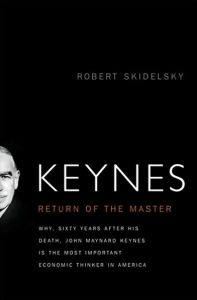
Robert Skidelsky
Keynes
Return of the Master
Public Affairs, 2009
看看什么内容?
“In the long run,” said Keynes, “we are all dead.” But can a new wave of Keynesian economics save capitalism, long term?


摘要提供范围:全球(不含 Antigua and Barbuda, Australia, Bahamas, Bangladesh, Barbados, Belize, Botswana, Brunei Darussalam, Cameroon, Cyprus, Dominica, Fiji, Gambia, Ghana, Grenada, Guyana, India, Jamaica, Kenya, Kiribati, Lesotho, Malawi, Malaysia, Maldives, Malta, Mauritius, Mozambique, Namibia, Nauru, New Zealand, Nigeria, Pakistan, Papua New Guinea, Saint Kitts and Nevis, Saint Lucia, Saint Vincent and the Grenadines, Samoa, Seychelles, Sierra Leone, Singapore, Solomon Islands, South Africa, Sri Lanka, Swaziland, Tanzania, United Republic of, Tonga, Trinidad and Tobago, Tuvalu, Uganda, United Kingdom, Vanuatu, Zambia )
Recommendation
The modern recession casts doubt on many long-held economic beliefs, in particular, the validity of free markets. Unable to agree on causes or remedies, economists look on as politicians try various kinds of stimulus spending and corporate bailouts. Pundits call forth the ghost of John Maynard Keynes, often incorrectly labeled as a has-been socialist and tax-and-spend liberal. But Robert Skidelsky, Keynes’ biographer and a noted expert on the economist and his work, reveals how Keynes’ pre-World War II experiences shaped an economic worldview that still holds lessons for the 21st century. This scholarly book assumes that the reader has more than a nodding acquaintance with modern economic theory and philosophy, yet Skidelsky also injects literary references and sparks of wit that enliven the sometimes-challenging text. getAbstract suggests this abbreviated, but solid, look at Keynes to students of economic and political history, and to anyone who is trying to make sense of how the 2008 crisis happened and how to move forward.
Summary
About the Author
Robert Skidelsky, emeritus professor of Political Economy at the University of Warwick, is the award-winning author of a three-volume biography of John Maynard Keynes.

Comment on this summary