
Join getAbstract to access the summary!
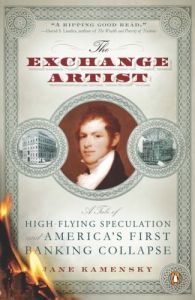
Join getAbstract to access the summary!
Jane Kamensky
The Exchange Artist
A Tale of High-Flying Speculation and America's First Banking Collapse
Penguin, 2008
What's inside?
Some con men are big dreamers who get in over their heads and cut corners so they won’t drown. And some are just rats.


Summary availability: Worldwide
Recommendation
Andrew Dexter Jr. is the villain of historian Jane Kamensky’s book on America’s first bank failure, which occurred in the early 1800s. He used worthless banknotes to finance construction of Boston’s Exchange Coffee House, at seven stories the U.S.’s tallest building at the time. In the process, he financially ruined hundreds of laborers who worked on the project. By the time they learned that his banknotes were bogus, Dexter was long gone. Kamensky deftly tells his tale with fascinating detail and little-known facts. In brilliant writing, she traces the rise of “speculative capitalism.” She offers the bittersweet saga of a man with little conscience and big dreams he never fulfilled. getAbstract finds that her book compellingly depicts America’s early financial history – and, perhaps, one facet of its emerging fiscal personality – through the tale of this colorful charlatan.
Summary
About the Author
Jane Kamensky chairs Brandeis University’s history department. She has won numerous, prestigious academic awards and fellowships. The author of Governing the Tongue, she is an expert on North American history before 1830.

Comment on this summary