
Join getAbstract to access the summary!
Join getAbstract to access the summary!
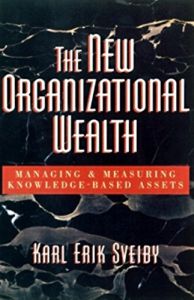
Karl Erik Sveiby
The New Organizational Wealth
Managing & Measuring Knowledge-Based Assets
Berrett-Koehler, 1999
What's inside?
What’s the most valuable commodity to any business? Not cash, time or any product — it’s knowledge, and it must be managed, manipulated, delivered, counted, and measured just like money.


Summary availability: Worldwide
Recommendation
Business is business, they say, but the knowledge management business is something else entirely. Author Karl Erik Sveiby earned his doctorate with a thesis that draws an interesting distinction between information and knowledge. This book owes a great deal to the research in that thesis, although some of the subtleties were probably lost in the translation after it was presented at Stockholm University. Dr. Sveiby offers managers a plausible structure for stratifying their employees. He provides a solid rationale to justify rationing resources and information. getAbstract recommends this book to knowledge managers. Professionals who feel they are not receiving adequate support, information, or compensation from managers also will find succor in these theories.
Summary
About the Author
Karl Erik Sveiby is research fellow at Queensland University of Technology in Brisbane, Australia. He began as a publisher of Swedish business journals in 1979. He and his partners sold the publishing company in 1994. Sveiby graduated from the doctoral program at Stockholm University in 1995. His thesis was Toward a Knowledge Perspective on Organization.



Comment on this summary