
Join getAbstract to access the summary!
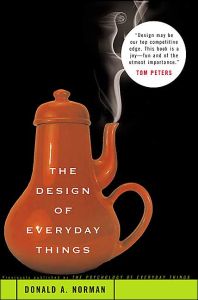
Join getAbstract to access the summary!
Donald A. Norman
The Design of Everyday Things
Basic Books, 2002
What's inside?
How to make products less confusing and more usable – it’s all in the design.


Summary availability: Worldwide
Recommendation
Dome-headed engineering professors call it “human factors engineering,” “interaction design” or “usability engineering,” but the purpose of this strangely-named discipline is far simpler than these appellations suggest: to make everyday items do what users expect them to do. Donald Norman has been thinking about usability issues longer than almost anyone and has insights commensurate with his experience. Norman knows how both people and machines work (he has degrees in psychology and engineering). More importantly, he knows how to bridge the gulf between the human mind and the devices the mind wants to use, from toasters to telephones to teapots. In this classic, he provides a few simple precepts and many wonderful examples showing how to design the most important component of any technology – the user’s experience. While some of Norman’s examples are a little long in the tooth (he discusses VCRs, not DVDs), getAbstract finds that the principles he describes in this friendly book are still sprightly almost 20 years after their initial publication.
Summary
About the Author
Donald A. Norman is co-founder of a consulting firm and professor of computer science at Northwestern University. He served as vice president of advanced technology for a major computer manufacturer.

Comment on this summary