
Join getAbstract to access the summary!
Join getAbstract to access the summary!
Alan G. Robinson and Sam Stern
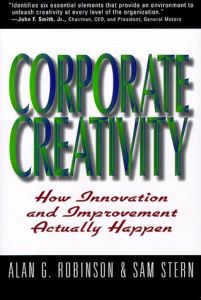
Corporate Creativity
How Innovation and Improvement Actually Happen
Berrett-Koehler, 1997
What's inside?
To foster creativity and innovation in your company, be alert to the serendipity of accident and acknowledge that anyone — even you — can be creative.


Summary availability: Worldwide
Recommendation
You can improve your company’s performance by increasing creativity and fostering employee innovation. Most creative acts are unexpected. Therein lies your company’s creative potential. A company is creative when its employees do something new and possibly useful without being directly shown or taught. Creativity can and should happen in every organization, including companies with highly standardized procedures. While creativity is intangible, you can see the results of it in your company’s improvements and innovations.The first five chapters provide an overview of creativity, outline the six essential elements that creativity requires. In the following chapters, the authors detail the six elements, provide several case studies to illustrate their points and show how to achieve each aspect of creativity. This is a useful book for any executive who wants his or her company, and the people in it, to realize their full creative potential. getAbstract recommends this book to managers and executives in any industry.
Summary
About the Authors
Alan G. Robinson is professor of management at the Isenburg School of Management, University of Massachusetts. He has researched corporate creativity in companies worldwide, including in Japan, Canada, Mexico, Great Britain, India, China and Russia. He has served as a consultant to more than 50 companies on the subject of creativity. Sam Stern is professor of education at Oregon State University and has taught at Harvard University’s Department of Economics. From 1990-1992, he served as Professor of Creativity Development at the Japan Management Association and led a research team in the study of creativity in 200 companies. He has acted as advisor in creativity to such companies as Hewlett-Packard, NASA and Polaroid.







Comment on this summary