
Join getAbstract to access the summary!
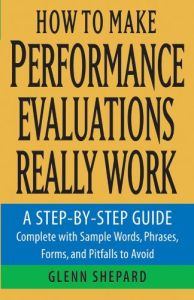
Join getAbstract to access the summary!
Glenn Shepard
How to Make Performance Evaluations Really Work
A Step-by-Step Guide Complete With Sample Words, Phrases, Forms, and Pitfalls to Avoid
Wiley, 2005
What's inside?
Handle performance evaluations poorly and risk a lawsuit, but do them well and everyone benefits.


Summary availability: Worldwide
Recommendation
This practical guide is a must-read for anyone who conducts performance evaluations - especially for those new to the process. Step-by-step, it explains why you should evaluate employee performance, how to set up a program and how to conduct the evaluations. The appendices alone are invaluable. Author Glenn Shepard provides nearly 60 pages of useful, hands-on materials. Appendix A is packed with words and phrases that will enable you to be specific about your observations of employee behavior in areas such as attendance and workplace safety. Appendix B provides five performance evaluation forms that demonstrate a variety of evaluation techniques, such as using essays or assigning numerical values to weighted descriptive scales. Appendix C includes several self-evaluation forms organizations can use as models. getAbstract recommends this book to managers, supervisors and human resource professionals who must develop workable, legally sound employee performance evaluation systems.
Summary
About the Author
Glenn Shepard runs seminars for managers. He wrote How to Manage Problem Employees.








Comment on this summary