
Join getAbstract to access the summary!
Join getAbstract to access the summary!
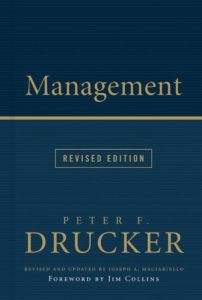
Peter F. Drucker
Management
HarperBusiness, 2008
What's inside?
Peter F. Drucker delivers core substance on the art of management.


Summary availability: Worldwide
Recommendation
To say that Peter F. Drucker wrote the book on management is absolutely accurate, but only if you make that plural. During his long lifetime, “the founding father of the study of management” published 34 major works, including 15 on the art and science of enterprise management. Drucker had a front-row seat for the managerial exploits of the 20th century’s leading corporations, and this update to his 1973 classic Management: Tasks, Responsibilities, Practices includes his kaleidoscopic take on many of them. Revised by Joseph A. Maciariello to incorporate Drucker’s later writings, this version lucidly covers every aspect of management, plus a remarkably diverse array of topics such as nonprofits, service organizations, corporate governance and “knowledge workers” (a term Drucker used to describe white-collar, skilled professionals in the labor force). getAbstract confirms that if you want to learn about management, you cannot do better than read Drucker’s acknowledged masterpiece. This is the bedrock business book.
Summary
About the Author
Peter F. Drucker (1909-2005) was an influential thinker and writer on management theory and practice. Joseph A. Maciariello was Drucker’s collaborator for 26 years.







Comment on this summary