
Join getAbstract to access the summary!
Join getAbstract to access the summary!
Robert W. Jacobs
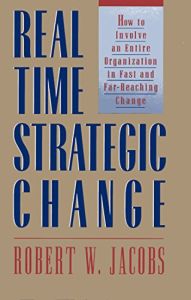
Real Time Strategic Change
How to Involve an Entire Organization in Fast and Far-Reaching Change
Berrett-Koehler, 1997
What's inside?
Why do so many change efforts fail? Maybe because the people most affected by them aren’t involved.


Summary availability: Worldwide
Recommendation
Consultant Robert W. Jacobs walks you through his "Real Time Strategic Change" program, which, he explains, has been successfully implemented in numerous companies and organizations. He discusses how and why it works, and points out why other commonly used change strategies don’t. Although the book achieves its mission nicely, it gets bogged down by continuous, detailed examples of each step in the process, which provide little in the way of illumination. His excellent guidelines for change still manage to shine through. getAbstract recommends this book to all those who are or will be involved with implementing individual, group or organization-wide change.
Summary
About the Author
Robert W. Jacobs is a partner in 5 Oceans, Inc., a consulting firm specializing in organization-wide transformation. His publications include articles and case studies on strategic change and its application. He lives in Chelsea, Michigan.


Comment on this summary