
Join getAbstract to access the summary!
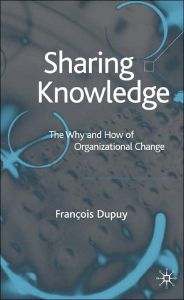
Join getAbstract to access the summary!
François Dupuy
Sharing Knowledge
The Why and How of Organizational Change
Palgrave Macmillan, 2004
What's inside?
You don't have to trash your workforce to stay competitive. After all, what is an organization but its people?


Summary availability: Worldwide
Recommendation
In response to globalization and other major business challenges in "post-industrial society," analysts have developed two highly different theories of organizational change. The first, "E theory," focuses on short-term financial gain, which usually translates into higher stock prices. Prevalent in North America, E theory encourages downsizing, including mass layoffs. Clearly, in E theory, the human element is of negligible importance. In contrast, "O theory" emphasizes retaining employees by upgrading their skills. Popular in Europe and Asia, O theory assumes an "implied contract of loyalty-protection" between management and employees. François Dupuy describes this theory, and how companies and other bureaucracies can apply it. His dense writing style and the book's forbidding layout, with few subheadings or visual aids such as charts, often make his reasoning difficult to follow. However, getAbstract believes this book is very useful for executives who want a new perspective on organizational change. Its prescient formula for corporate transformation is not only moral and humane, but also intelligent and sustainable. It recognizes that an organization is nothing without its people.
Summary
About the Author
François Dupuy is a senior executive at a consulting firm that assists large organizations to improve performance and deal with radical change. He teaches organizational behavior at the graduate level.

Comment on this summary