
Join getAbstract to access the summary!
Join getAbstract to access the summary!
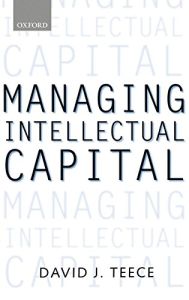
David J. Teece
Managing Intellectual Capital
Organizational, Strategic and Policy Dimensions
Oxford UP, 2001
What's inside?
Knowledge is property. Innovation is capital. Once you understand that, your asset base is different and your management had better be different, too.


Summary availability: Worldwide
Recommendation
In his preface, author David J. Teece promises a theoretical framework for understanding intellectual property and practical advice about managing it. Theory ultimately prevails in this book, but valuable nuggets of managerial guidance await any entrepreneur willing to dig for them. As a professor and as the presenter of Oxford’s Clarendon Lecture in Management Studies, from which this book is drawn, Teece naturally tends toward abstract thinking. Some of the territory has been traveled before (i.e. the message that bureaucratic, hierarchical organizations tend to stifle innovation) but Teece adds a lot of intriguing material. getabstract.com believes analytically minded academics, entrepreneurs and executives will find Teece’s volume illuminating, most notably his educated perspective on antitrust activism in the high tech arena. He concludes that government regulators should probably stick to regulating industries they understand. Well, if they want to understand intellectual property, they should start here.
Summary
About the Author
David J. Teece teaches business administration at the University of California at Berkeley, and is the director of the Institute of Management, Innovation and Organization. He has held previous positions at St. Catherine’s College, Oxford University, and at the Oxford Institute for Energy Studies. He presented the Clarendon Lectures in Management Studies in 1998 and in 1999 was awarded the Andersen Consulting Award.




Comment on this summary