
加入 getAbstract 阅读摘要
加入 getAbstract 阅读摘要
Adam Smith
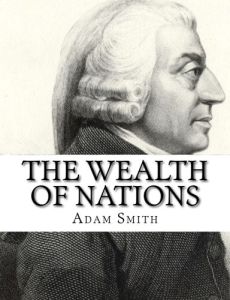
The Wealth of Nations
CreateSpace, 1775
看看什么内容?
The classic par excellence: Adam Smith's seminal explanation of political economy.


Disponibilidade do resumo: global
Recommendation
getAbstract believes that no serious economist can do without this exhaustive work, originally published in five volumes as An Inquiry into the Nature and Causes of the Wealth of Nations. This classic is a pragmatic and accessible milestone in the history of economics. Its author, Adam Smith, is woven into every economics textbook. However, Smith’s theories, which today often are recounted mostly in fragments, frequently incorrectly, reveal their entire social and economic innovative power only in context. Smith burst onto the scene at a time when absolutist national states monopolized the world’s precious metal reserves and tried to increase their own wealth through stringent export policies. These states were motivated by an entirely new concept about national wealth: that it stemmed from the work of the country’s people, not from gold. Based on that idea, economic markets should balance themselves as if guided by an “invisible hand,” impelled by each individual’s self-interest. The state has to provide only an orderly framework and specific public goods and services. Even though Smith’s image of idealized economic and social harmony may have developed a few cracks over the course of time, his ideas have inspired many well-known economists during the past 250 years, including David Ricardo, Vilfredo Pareto and Milton Friedman.
Summary
About the Author
Adam Smith, the son of a jurist, was born on June 5, 1723, in Kirkcaldy in Scotland. He learned moral philosophy from Francis Hutcheson, whose teachings combine the ideas of the philosophers John Locke and David Hume. After studying in Oxford and Glasgow, and teaching for some time, Smith was appointed professor of logic at Glasgow University in 1751, and professor of moral philosophy one year later. During this time, he was in close contact with David Hume, whose ethical and economic ideas influenced him substantially. In 1763, Smith left Glasgow for a two-year educational journey through France and Switzerland as a young duke’s private teacher. From his encounters with the French physiocrats Turgot and Quesnay, Smith developed the idea for his main work, The Wealth of Nations. However, he did not finish and publish it until 1776. In 1779, Smith was appointed duty controller in Edinburgh, where he died on July 17, 1790. Shortly before his death, he ordered his friends to destroy all of his unfinished writings.

Comment on this summary