
Join getAbstract to access the summary!
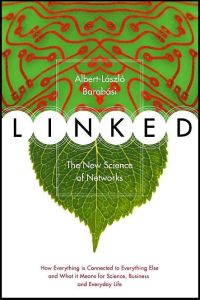
Join getAbstract to access the summary!
Albert-László Barabási
Linked
The New Science of Networks
Perseus Books, 2002
What's inside?
Networks everywhere follow the same simple mathematical laws – which matter to you more than you may think.


Summary availability: Worldwide
Recommendation
Networks all have a meaningful similarity. Whether the network at hand is a party, a cell's molecular reaction, or the puzzling old bridges of Königsberg, Prussia, you could describe each one by using a branch of mathematics called “graph theory,” invented by Leonhard Euler in 1736. His long-dormant concept bloomed in the 1990s with the advent of the Internet and continues to yield insights into many important problems. Sounds a bit dry? Don't worry. Albert-László Barabási writes in a lively style (there's nary an equation in sight) with fun, informative anecdotes. The tale of how he and other scientists discovered "the laws of networks" unfolds like a detective story. After reading this book, you'll see networks everywhere and gain deeper insight into disparate phenomena, from biological systems to business organizations to the economics of "increasing returns." getAbstract recommends this clear, accessible book to anyone who has ever wondered about the ubiquitous webs that encompass all things. This is popular science at its best.
Summary
About the Author
Albert-László Barabási is the Emil T. Hofman professor of physics at the University of Notre Dame in Indiana. Science, The New York Times and other popular media have covered his work.

Comment on this summary