
Join getAbstract to access the summary!
Join getAbstract to access the summary!
Thomas L. Friedman
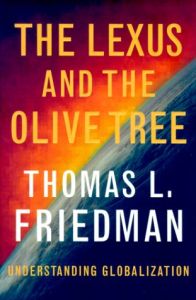
The Lexus and the Olive Tree
FSG, 1999
What's inside?
Welcome to the year 2000, where tomorrow’s technology meets yesterday’s tradition.


Zusammenfassung verfügbar: weltweit
Recommendation
Thomas L. Friedman explains that the old world order of the Cold War has been replaced by a new paradigm of globalization. In this system, finance, information and technology are being democratized. The Lexus automotive brand of the title is the emblem of globalization. The Olive Tree stands for deep local cultural connections. The tension between globalization and cultural identity is the defining conflict of the new era. Friedman excels at making connections among diverse events and is a brilliant storyteller. He is particularly good at translating complex ideas into vivid, clear, colloquial language. His observations seem so simple that it is easy to miss how profound they are. His arguments seem almost irrefutable. He is basically optimistic and chooses not to dwell much on the dangers implicit in this new world. getAbstract.com recommends the book to everybody. Because Friedman draws heavily on his rich store of anecdotes this book is best appreciated in its full length.
Summary
About the Author
Thomas L. Friedman is the Foreign Affairs columnist for the New York Times. He has won two Pulitzer Prizes for his reporting as Times bureau chief in Beirut and Jerusalem. His first book, From Beirut to Jerusalem, won the National Book Award in 1988.

Comment on this summary