
Melden Sie sich bei getAbstract an, um die Zusammenfassung zu erhalten.
Melden Sie sich bei getAbstract an, um die Zusammenfassung zu erhalten.
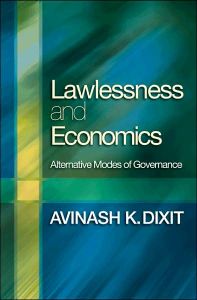
Avinash K. Dixit
Lawlessness and Economics
Alternative Modes of Governance
Princeton UP, 2004
Was ist drin?
How game-theory modeling explains the way economies function without laws.


Zusammenfassung verfügbar: weltweit
Recommendation
In Shakespeare’s Henry VI Part 2, a member of John Cade’s gang famously suggests that the rebels should, as an initial step toward utopia, “Kill all the lawyers.” Certainly, anyone who has forked over a hefty retainer can sympathize, but can societies function without legal systems? And if so, how? The answer, according to Princeton economist Avinash Dixit, is that they can indeed function and have for thousand of years, provided the right kinds of social institutions are in place. In fact, lawless systems can work better than traditional justice systems for some small, homogenous groups. Thus, extralegal institutions are still common, from trade associations that arbitrate members’ disputes to private security guards. While this slim book is thick with equations, getAbstract thinks it gives a nice overview of the empirical literature. The game-theory models yield a few surprising conclusions and many areas for further research. While killing all the lawyers still is probably not prudent, Dixit begins to show when quasi-legal institutions lubricate and when they gum up the wheels of commerce.
Summary
About the Author
Avinash K. Dixit is a Professor of Economics at Princeton University.

Comment on this summary