
Melden Sie sich bei getAbstract an, um die Zusammenfassung zu erhalten.
Melden Sie sich bei getAbstract an, um die Zusammenfassung zu erhalten.
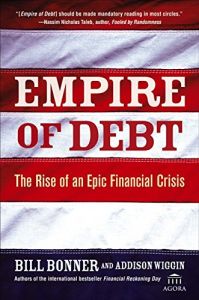
Bill Bonner and Addison Wiggin
Empire of Debt
The Rise of an Epic Financial Crisis
Wiley, 2005
Was ist drin?
Record-breaking U.S. debt will damage everything from the country`s political relationships to individual bank accounts.


Zusammenfassung verfügbar: weltweit
Recommendation
Just when you thought you had heard the dangers of the staggering U.S. national debt described from every possible perspective, authors Bill Bonner and Addison Wiggin present it as history. Their fervent approach puts this problem and the American empire into a global and historical context. From the ancient Greeks to President Woodrow Wilson’s misguided adventures in Mexico and Europe, to the prolonged Japanese deflation crisis, the account reads like a historical novel instead of a history. The authors’ writing is refreshing and witty - which is important, since politicians, citizens and the media tend to fall asleep as soon as anyone mentions either imperialism or the national debt, which the authors see as a financial house of cards. Readers may (in fact, probably will) disagree with some of their more politicized projections and opinions, but their contrarian perspective is an intriguing light to shine on such an ambitious, controversial topic. getAbstract recommends this book to history buffs, investment managers and journalists.
Summary
About the Authors
Bill Bonner is financial newsletter publisher. He founded the newsletter the Daily Reckoning, where Addison Wiggin is editorial director and publisher. Bonner co-authored Financial Reckoning Day. Wiggin wrote The Demise of the Dollar...and Why It’s Great for Your Investments.

Comment on this summary