
Melden Sie sich bei getAbstract an, um die Zusammenfassung zu erhalten.
Melden Sie sich bei getAbstract an, um die Zusammenfassung zu erhalten.
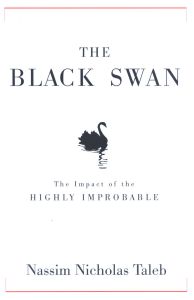
Nassim Nicholas Taleb
The Black Swan
The Impact of the Highly Improbable
Random House, 2007
Was ist drin?
Open your eyes to many highly unlikely but important events that shape the world – and your life.


Zusammenfassung verfügbar: weltweit

Recommendation
According to critic Harold Bloom, Hamlet’s predicament is not “that he thinks too much” but rather that “he thinks too well,” being ultimately “unable to rest in illusions of any kind.” The same could be said for philosopher, essayist and trader Nassim Nicholas Taleb, who finds something rotten in misguided yet supremely confident investment gurus, traders, hedge fund managers, Wall Street bankers, M.B.A.s, CEOs, Nobel-winning economists and others who claim that they can predict the future and explain the past. Like everyone else, says Taleb, these so-called “experts” fail to appreciate “black swans”: highly consequential but unlikely events that render predictions and standard explanations worse than worthless. Taleb’s style is personal and literary, but his heterodox insights are rigorous (if sometimes jolted by authorial filigree). This combination makes for a thrilling, disturbing, contentious and unforgettable book on chance and randomness. While Taleb offers strong medicine some readers may find too bitter at times, getAbstract prescribes it to anyone who wants a powerful inoculation against gullibility.
Summary
About the Author
Nassim Nicholas Taleb, a former derivatives trader, is Dean’s Professor in the Sciences of Uncertainty at the University of Massachusetts and teaches at New York University’s Courant Institute of Mathematical Sciences. He also wrote Fooled by Randomness.

Comment on this summary