
تخطي التنقل
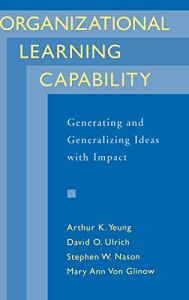
Organizational Learning Capability
Book

Organizational Learning Capability

Generating and Generalizing Ideas with Impact

Oxford UP, 1999 المزيد...

Buy the book


Editorial Rating

7

getAbstract Rating

  • Scientific
  • Engaging

Recommendation

Drawing the reader’s attention with ample real-business examples, the authors discuss corporations as entities that must adapt, generate ideas and act upon new information. The writing team – Arthur K. Yeung, David O. Ulrich, Stephen W. Nason and Mary Ann Von Glinow – delve into learning styles, basing their work on research and material gleaned from a widespread survey of corporations and organizations. They stack up the building blocks necessary for organizational learning, the corporate ability to generate and implement ideas. Although based on scholarly research, the book is concisely written in an easily accessible, conversational tone, and comes to life with corporate case studies. getAbstract recommends this book to managers, executives and owners whose organizations might need to learn a thing or two.

Summary

Learning is Fundamental

Organizational learning is, quite simply, an organization’s ability to generate ideas with impact across many organizational boundaries via particular management activities. Having a good idea is never enough. The idea must be shared and put it into practice.

Harley-Davidson CEO Rich Teerlink took organizational learning to new heights with “Harley University.” In this program, customers attend extensive motorcycle safety and maintenance training workshops, dealers learn more about service and business practices, and employees take classes in leadership, values and change.

Teerlink further focuses on organizational learning by boosting it in nearly every speech to employees, shareholders, distributors or customers. He believes strongly that learning is the core of successful business competition and said in a mid-1990s speech to managers, “Continuous and constant questioning of the status quo is a fundamental requisite for continuous improvement... Open-minded review of every aspect of an organization is essential for success.”

Organizations – and individuals – do not learn in the same ways, or share what they’ve learned in the same...

About the Authors

Arthur K. Yeung  is Executive Director (Asia-Pacific) of the University of Michigan Business School, where he teaches and conducts research in leadership and organizational capabilities of Asian multinational corporations. David O. Ulrich  is a professor in the School of Business at the University of Michigan in Ann Arbor. Stephen W. Nason  Stephen W. Nason Mary Ann Von Glinow  is professor of management and international business in the College of Business at Florida International University. She was the 1994-95 President of the Academy of Management.


Comment on this summary

More on this topic

Related Skills

تطوير المنظمة
التحول الرقمي
Drive Team Performance
Enable Digital Organization
Execute Digital Operations
الموارد البشرية
ابتكر بشكل استراتيجي
قيادة بشكل استراتيجي
قد نفسك
التعاون الرئيسي
Navigate Leadership Challenges
النمو الشخصي
تعزيز التنوع والإنصاف والشمول
Strengthen Team Collaboration
فهم الابتكار
مهارات مكان العمل
Practice Transformational Leadership
قيادة التحسين المستمر
المهارات الناعمة
احتضان التفكير المتباين
إدارة تأثير قيادتك
السعي وراء التعلم مدى الحياة
التعاون عبر الوظائف
الاستفادة من مجموعات موارد الموظفين
فهم التعلم
ازرع عقلية النمو
كن مبدعًا
الابتكار
الاستفادة من التعلم الاجتماعي
كن متعلمًا ذاتيًا
ازرع الفضول
تعزيز تحمل الفشل
تحدي الافتراضات
تعزيز التعاون
تعزيز ثقافة الابتكار
تبنَّ عادة التعلم
القيادة من خلال التغيير
تشكيل الثقافة التنظيمية
القيادة
قيادة التغيير بدون سلطة
طور مهاراتك في التفكير
القيادة التنفيذية
الإدارة
فهم المنظمات
تسهيل توليد الأفكار الجماعية
تنمية المرونة
تعزيز تجربة الموظفين
Manage Learning and Development
شجع على التجريب
Build Digital Culture
الاستفادة من البراعة
تحفيز الأداء التنظيمي
تنفيذ المرونة
تعزيز ثقافة التعلم
فهم التغيير التنظيمي
Manage People and Talent
إدارة التغيير
كن أكثر تكيفًا
تعزيز مرونة الفريق
احتضن التغيير
فهم التعلم التنظيمي