
Saltar la navegación
Change the Culture, Change the Game
Book

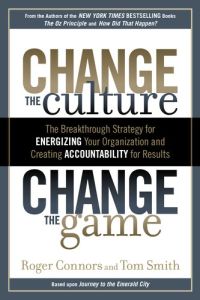
Change the Culture, Change the Game

The Breakthrough Strategy for Energizing Your Organization and Creating Accountability for Results

Portfolio, 2011 más...

Buy the book


Editorial Rating

8

getAbstract Rating

  • Innovative
  • Applicable

Recommendation

In this new, revised version of their 2002 book, Journeys to the Emerald City, management consultants Roger Connors and Tom Smith offer wisdom, anecdotes and facts to help you modify your organizational culture for positive business results. The authors discuss change, culture, and people by providing three-step programs, five-principle approaches, three-level matrices, and a pyramid. The authors employ multiple models because they address elements of the workplace that are as intangible as they are important. As Connors and Smith are fond of saying, “Either you will manage the culture, or it will manage you.” This is proven true even though formulas and jargon occasionally muffle their sound methods and useful message. getAbstract recommends this book to CEOs, executives, human resources professionals, parents and anyone running a team who wants better results.

Summary

“Creating a Culture of Accountability”

As a leader, you must be alert to “organizational culture,” which is comprised of workers’ thoughts and actions. Ignoring culture is risky, because failing to shape your culture keeps your team from achieving improved results. You form culture by paying attention to your workforce’s “experiences, beliefs and actions.” Being attuned to these aspects means taking care of results. Once you identify the outcomes you want, you must determine how the current state of your company’s culture can lead to those outcomes. Remember that such a transformative process is neither a one-shot action nor something you can delegate.

In the most desirable organizational culture, people exhibit “Above the Line” accountability. They approach problems with the process: “See It, Own It, Solve It and Do It.” “Below the Line” executives avoid responsibility when things go wrong and don’t feel answerable for making them go right. They are skilled at assigning blame. Organizations thrive when they have plenty of above-the-line employees.

Where to Begin: Results

To hold your team members accountable for new, improved results, be clear about ...

About the Authors

Management consultants Roger Connors and Tom Smith co-wrote Journeys to the Emerald City, The Oz Principle and How Did That Happen?


Comment on this summary

More on this topic

Related Skills

Karriere voranbringen
AI Transformation
Kreativ sein
Emotionale Intelligenz entwickeln
Anpassungsfähigkeit steigern
Karriere
Wirksam kommunizieren
Innovative Produkte entwickeln
Develop Team Members
Digitale Transformation
Drive AI Transformation
Enable Digital Organization
Customer Experience verbessern
Enhance Cybersecurity
Entrepreneurship
Personalwesen
Ethisch führen
Operative Planung leiten
Strategisch führen
Sich selbst führen
Gut leben
Gute Entscheidungen treffen
Unternehmenskommunikation managen
Manage People and Talent
Teams und Abteilungen managen
Management
Marketing
Soziale Kompetenzen entwickeln
Navigate Leadership Challenges
Persönliche Entwicklung
Talente strategisch einsetzen
Vertriebsstrategie entwickeln
Diversity, Equity & Inclusion fördern
Vertrieb
Soft Skills
Strengthen Team Collaboration
Innovation verstehen
Organisationen verstehen
Berufliche Kompetenzen
Fragen stellen
Selbstwahrnehmung entwickeln
Meetings wirksam gestalten
Employee Experience verbessern
Kundenorientierung fördern
Feedback geben
Interkulturell kommunizieren
Durch Change führen
Experimentieren fördern
Offene Kommunikation fördern
Innovation
Employee Resource Groups nutzen
Zusammenarbeit meistern
Führung
Gruppenentscheidungen treffen
Annahmen hinterfragen
Organize for AI
Interne Mobilität fördern
Intrapreneurship betreiben
Team motivieren
Kulturelles Bewusstsein entwickeln
Andere beeinflussen
Verletzlichkeit zeigen
Demut üben
Sinn finden
Unternehmens-Purpose kommunizieren
Sich selbst verstehen
Drive Team Performance
Neue Ideen vorantreiben
Von unten führen
Funktionsübergreifend zusammenarbeiten
Interne Kommunikation managen
Growth Mindset entwickeln
Neuzugänge onboarden
Change verstehen
Unternehmenskultur verstehen
Strategie umsetzen
Inklusiv führen
Ideenfindung moderieren
Kundenfeedback umsetzen
Build Digital Culture
Innovationskultur fördern
Teamziele setzen
Practice Transformational Leadership
Change managen
Führungswirkung steuern
Positive Fehlerkultur fördern
Psychologische Sicherheit fördern
Executive Leadership
Unternehmensperformance steigern
Unternehmenskultur gestalten
Gemeinsame Vision definieren
Verantwortung übernehmen
Strategisch kommunizieren
Foster Team Culture
Servant Leadership praktizieren
Inklusive Kultur schaffen
Wandel von unten anstoßen
Vertriebsteams managen
Gut in den Job starten
Kernwerte definieren
In Unternehmenskultur zurechtfinden
Build Security Culture
Diskussionen moderieren
Unternehmenskultur beeinflussen
Eigenverantwortung fördern
Accountability sicherstellen