
Navigation überspringen
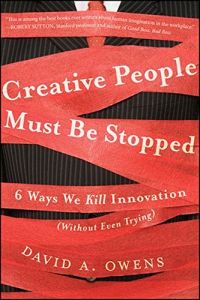
Creative People Must Be Stopped
Book

Creative People Must Be Stopped

6 Ways We Kill Innovation (Without Even Trying)

Jossey-Bass, 2011 Mehr

Buy the book


Editorial Rating

9

getAbstract Rating

  • Innovative
  • Applicable

Recommendation

Vanderbilt Graduate School of Management professor David A. Owens offers a novel model for understanding innovation. He argues that most innovators focus on overcoming obstacles only in their familiar areas: Engineers target technical challenges, while marketers zero in on price points. This myopia leads to flops like the Segway Personal Transporter, a technical triumph that initially failed commercially because it clashed with a societal value: People thought its riders looked silly. Owens says a successful innovation must overcome challenges, or “constraints,” in six areas: “individual, group, organizational, industry, societal and technological.” He offers thorough guidance on fostering creativity and overcoming the hurdles in each phase of a project, explains the details with tables and diagrams, and provides a quiz you can take to see how well you contend with each constraint. getAbstract recommends his advice on setting creativity free to entrepreneurs, managers, strategic planners, engineers, marketers and innovators of all kinds.

Summary

Constraining Creativity

Business leaders unwittingly sabotage innovation because they remain unaware of the “constraints” that can block successful implementation. They may focus on only one or two constraints – such as the need to generate original ideas – but overlook less obvious yet significant constraints, such as the cultural values and societal traditions. Six major “innovation constraints” impede creativity. Successful innovations overcome the challenges of each one:

1. “Individual Constraints”

The first challenge is to cultivate an individual’s creative abilities. This requires understanding creativity. It’s not a special attribute limited only to certain personality types. Creativity is a way of thinking – it’s different from daily, habitual thought processes, and it’s available to everyone.

To strike that spark, address these areas of individual cognition:

  • “Perception” – Ordinarily, your brain acts as a perception filter, screening out large segments of information each day. Without such a filter, information would overwhelm you. But, as you filter it, you might overlook possibly useful data. If you use the right techniques...

About the Author

David A. Owens teaches at Vanderbilt’s Graduate School of Management where he directs the Executive Development Institution. He’s consulted for the Smithsonian, Nissan and NASA.


Comment on this summary

More on this topic

Related Skills

Karriere voranbringen
AI Transformation
Anpassungsfähigkeit steigern
Karriere
Wirksam kommunizieren
Unternehmen entwickeln
Drive Team Performance
Entrepreneurship
Executive Leadership
Personalwesen
Sich selbst führen
Leverage AI for Product Development
Leverage AI in Your Daily Tasks
Gute Entscheidungen treffen
Manage People and Talent
Zusammenarbeit meistern
Soziale Kompetenzen entwickeln
Persönliche Entwicklung
Diversity, Equity & Inclusion fördern
Unternehmenskultur beeinflussen
Soft Skills
Nachhaltigkeit
Innovation verstehen
Organisationen verstehen
Berufliche Kompetenzen
Fragen stellen
Neue Ideen vorantreiben
Meetings wirksam gestalten
Use AI for Generating Ideas
Design Thinking anwenden
Führung
Sich selbst verstehen
Ideenfindung moderieren
Denkfehler vermeiden
Funktionsübergreifend zusammenarbeiten
Experimentieren fördern
Verletzlichkeit zeigen
Strategisch innovieren
Generationenvielfalt fördern
Führungsansätze verstehen
Foster Team Culture
Ambidextrie nutzen
Innovation organisieren
Inklusiv führen
Neugierig sein
Produktinnovation managen
Kreativität fördern
Positive Fehlerkultur fördern
Nachhaltig innovieren
Offene Kommunikation fördern
Innovationskultur fördern
Intrapreneurship betreiben
Kreativ zusammenarbeiten
Annahmen hinterfragen
Wandel von unten anstoßen
Herausforderungen überwinden
Diskussionen moderieren
Practice Transformational Leadership
Projekte managen
Management
Strengthen Team Collaboration
Ideen entwickeln
Kreativität verstehen
Divergent denken
Gruppenentscheidungen treffen
Psychologische Sicherheit fördern
Innovative Produkte entwickeln
Kreativ sein
Besser denken
Innovation