Navigation überspringen
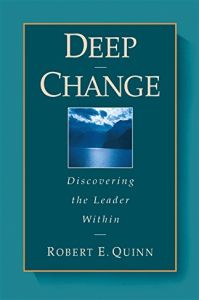
Deep Change
Book

Deep Change

Discovering the Leader Within

Jossey-Bass, 1996
First Edition: 1996 Mehr

Buy the book


Editorial Rating

8

getAbstract Rating

  • Applicable

Recommendation

This book is for readers who are ready to look inside themselves in order to change their organizations. It isn’t a book for novices. You need a fair amount of business experience to have the perspective to understand author Robert E. Quinn’s message. Likewise, you need to have enough invested in your current organization to care if it changes. Quinn offers some theoretical analysis, but leavens it with ample practical examples and exercises. If you have a job, rather than a career, or if you are committed to staying in a narrow, technical field or just waiting for your retirement, skip this book. However, if you’re willing to engage in extended self-examination, getAbstract.com suggests this to you. However, be warned that that many of Quinn’s drills are emotionally challenging, such as identifying how you resist change or pegging which elements of your organization are more committed to the status quo than to success. But, then, whoever said change was easy?

Summary

What Is "Deep Change" and Why Does It Matter?

When most people talk about the need to change, they’re talking about little "incremental" changes - details they can alter over time. Incremental change isn’t threatening, but it is not powerful enough to address the forces at work in today’s world. Incremental change is appealing because, "during incremental change, we feel we are in control," however, eventually, the need for "deep change" will confront you. It requires re-examining and altering the fundamental ways that you approach your work and the world; it entails redefining yourself and the paradigms you use to operate.

The process will be uncomfortable, for you and everyone in your organization (defined as an organized system with regular, proven patterns of actions), but the nature of the world and of business organizations makes it necessary. Your sense of who you are is based on what you’ve done before and on your place in your organization Such borders shape your identity, so why do you have to change them?

If you want to retain vitality, you have to plunge into the terrifying process of personal and professional self-examination and change - not because...

About the Author

Robert E. Quinn has worked with executives managing organizational change for more than 20 years. The author of several books, Quinn is a professor of business administration at the University of Michigan and a member of the World Business Academy.


Comment on this summary

More on this topic

Related Skills

Karriere voranbringen
AI Transformation
Kreativ sein
Karriere
Wirksam kommunizieren
Businessplan entwickeln
Innovative Produkte entwickeln
Unternehmen entwickeln
Digitale Transformation
Enable Digital Organization
Entrepreneurship
Execute Digital Operations
Personalwesen
Ethisch führen
Operative Planung leiten
Teams und Abteilungen managen
Management
Soziale Kompetenzen entwickeln
Persönliche Entwicklung
Strategisch planen
Diversity, Equity & Inclusion fördern
Soft Skills
Innovation verstehen
Organisationen verstehen
Berufliche Kompetenzen
Intrapreneurship betreiben
Diskussionen moderieren
Build Digital Culture
Zusammenarbeit meistern
Kreativität fördern
Zugehörigkeitsgefühl fördern
Kernwerte definieren
Purpose, Vision und Mission definieren
Team motivieren
Inklusiv führen
Servant Leadership praktizieren
Ideenfindung moderieren
Führungswirkung steuern
Unternehmenskultur beeinflussen
Strategisch kommunizieren
Kontinuierliche Verbesserung vorantreiben
Design Thinking anwenden
Navigate Leadership Challenges
Drive AI Transformation
Strategie umsetzen
Psychologische Sicherheit fördern
Manage People and Talent
Kreativ zusammenarbeiten
Verletzlichkeit zeigen
Offene Kommunikation fördern
Eigenverantwortung fördern
Change verstehen
Sich selbst führen
Sich selbst verstehen
Büropolitik meistern
Teamzusammenhalt stärken
Wandel von unten anstoßen
Innovation
Führungsansätze verstehen
Change managen
Strengthen Team Collaboration
Executive Leadership Fallstudien
Innovationskultur fördern
Experimentieren fördern
Annahmen hinterfragen
Foster Team Culture
Durch Change führen
Drive Team Performance
Practice Transformational Leadership
Führung
Gemeinsame Vision definieren
Executive Leadership