
Navigation überspringen
Emotional Intelligence for Managing Results in a Diverse World
Book

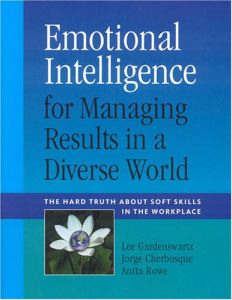
Emotional Intelligence for Managing Results in a Diverse World

The Hard Truth about Soft Skills in the Workplace

Davies-Black Publishing, 2008 Mehr

Buy the book


Editorial Rating

7

getAbstract Rating

  • Applicable

Recommendation

Feelings and emotions affect how people perform their jobs, of course, and shape the tenor of their workplaces. The impact and applicability of emotional intelligence (EI) at work is well established. If you’re ready for a more focused treatment, Lee Gardenswartz, Jorge Cherbosque and Anita Rowe offer this manual about the use of EI in working with and managing all kinds of people. They submit that dealing with human differences triggers a variety of emotions, many of which are counterproductive. They provide a four-part “Emotional Intelligence and Diversity Model” to help managers handle their emotions – and their diverse employees – effectively. The book includes an assortment of exercises, charts and quizzes to help raise your emotional intelligence. getAbstract finds that this quite specific guide is very useful for managers, particularly less experienced ones, whose workplaces present diversity challenges.

Summary

“Feelings, Nothing More Than Feelings...”

Your feelings are an essential part of who you are. That doesn’t change at work, where feelings affect performance. In fact, your emotions supply the fuel that drives your energy, enthusiasm and inspiration. However, emotions also can be a source of anger and frustration. If not managed properly, they can cause problems in your workplace.

Those who cope best with their emotions have well-developed emotional intelligence (EI), “the ability to understand and deal with feelings, both your own and those of others, in a healthy and constructive way.”

Feelings are your body’s way of telling you that something significant is happening. Suppressing them has negative consequences. Unexpressed feelings may cause dysfunctional behaviors, including anxiety, depression or substance abuse. Unfortunately, societal expectations condition many people from early childhood to disregard their feelings. Just think of common phrases like “chill out,” “big boys don’t cry” or “keep a stiff upper lip.” Unacknowledged emotions can still influence behavior; to be able to manage your feelings, you first have to recognize them.

Emotional Intelligence...

About the Authors

Lee Gardenswartz, Ph.D., is a diversity trainer and a principal in a management consulting company. Anita Rowe, Ph.D., is a diversity consultant and partner in the Emotional Intelligence and Diversity Institute. She and Gardenswartz also published Managing Diversity and the Global Diversity Desk Reference. Jorge Cherbosque, Ph.D., teaches at the Anderson School of Management at UCLA and is co-director of the staff Counseling and Consulting Center.


Comment on this summary

More on this topic

Related Skills

Selbstvertrauen aufbauen
Drive Team Performance
Employee Experience verbessern
Innovationskultur fördern
Foster Team Culture
Personalwesen
Innovation
Ethisch führen
Gut leben
Gute Entscheidungen treffen
Performance managen
Management
Diversity, Equity & Inclusion fördern
Digitalkompetenz aufbauen
Organisationen verstehen
Berufliche Kompetenzen
Understand Organizational Behavior
Sozialverhalten verstehen
Empathie und Mitgefühl zeigen
Besser denken
Gespräche führen
Ethnische Miinderheiten inkludieren
Generationenvielfalt fördern
Teamdynamik verstehen
Resilienter werden
Kreativ zusammenarbeiten
Wirksam kommunizieren
Executive Leadership
Change managen
Probleme lösen
Mikroaggressionen verstehen
Manage People and Talent
Neurodiversität fördern
Kreativ sein
Offene Kommunikation fördern
Unternehmenskultur beeinflussen
Kulturelle Trends entdecken
Verantwortung übernehmen
Positiv denken
Mit schwierigen Menschen umgehen
Andere beeinflussen
Impostor-Syndrom überwinden
Kreativität fördern
Mikroaggressionen vermeiden
Selbstgesteuert lernen
Persönliche Entwicklung
Selbstbewusst auftreten
Menschliches Verhalten verstehen
Leben aktiv gestalten
Stress managen
Führungswirkung steuern
Navigate Leadership Challenges
Achtsamkeit üben
Unconcious Bias verstehen
Ideenfindung moderieren
Selbstzweifel überwinden
Führung
Mentale Gesundheit verbessern
Unsicherheit überwinden
Persönlichkeitstypen verstehen
Virtuell zusammenarbeiten
Diskussionen moderieren
Kulturelles Bewusstsein entwickeln
Andere Perspektiven einnehmen
Anpassungsfähigkeit steigern
Denkfehler vermeiden
Diversität fördern
Coachbar sein
Zusammenarbeit meistern
Schwierige Gespräche führen
Büropolitik meistern
Herausforderungen überwinden
Soziale Signale erkennen
Grenzen setzen
Selbstdisziplin entwickeln
Durch Change führen
Kommunikationsstil anpassen
Verletzlichkeit zeigen
Servant Leadership praktizieren
Authentisch sein
Growth Mindset entwickeln
Sinn finden
Practice Transformational Leadership
Psychologische Sicherheit fördern
Eigenes Wohlbefinden stärken
Demut üben
Strengthen Team Collaboration
Sich selbst verstehen
Kommunikation verstehen
Globale Perspektiven entdecken
Sich selbst führen
Emotionen verstehen
Selbstbeherrschung entwickeln
Soft Skills
Unternehmenskultur gestalten
Funktionsübergreifend zusammenarbeiten
Emotionale Intelligenz entwickeln
Emotionen regulieren
Selbstwahrnehmung entwickeln
In Unternehmenskultur zurechtfinden
Soziale Kompetenzen entwickeln
Interkulturell kommunizieren
Kulturelle Unterschiede verstehen