Saltar a navegação
Everyday Bias
Book

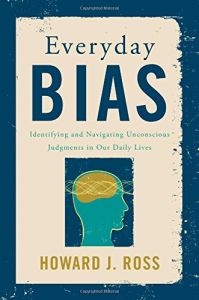
Everyday Bias

Identifying and Navigating Unconscious Judgments in Our Daily Lives

Rowman & Littlefield Publishing Group, Inc., 2014 mais...

Buy the book


Editorial Rating

8

getAbstract Rating

  • Innovative
  • Applicable

Recommendation

Diversity consultant Howard J. Ross shows how to free yourself from biases you probably don’t even know you have. The problem is that biases are unconscious. As a result, you may be unaware of some of the reasons underlying your actions and reactions. You may have rejected a job applicant who resembles someone you don’t like, or you might choose a presidential candidate based on height. You may have missed great opportunities because of a hidden antipathy against certain groups of people or an unacknowledged assumption about gender roles. If you increase your awareness of your biases, you can take steps to circumvent them – as do orchestras that audition players behind a screen to bypass race, age and gender biases, and just hear the music. Ross explains the evolutionary roots of bias, and outlines strategies for finding and defusing individual and organizational prejudices. He recounts fascinating research findings, such as the one featuring radiologists so intent on spotting cancer cells that they didn’t notice the inch-tall image of a gorilla that researchers had superimposed on the X-ray. getAbstract recommends Ross’s insights to human resource professionals, managers and leaders dealing with a diverse workforce, and to anyone seeking to learn, grow and evolve.

Summary

Gut Feelings

Everyone has biases. Over a lifetime, you and every other human being compile a mental database of judgments, beliefs and prejudices. You draw on this resource to make virtually every decision. But, you usually won’t know you’re checking in with your hidden biases because this database is stored in your unconscious mind. It filters your decisions beyond your awareness.

Hidden biases explain why subjects in one experiment consistently gave higher ratings to a student application when they thought it came from a male. Corporate recruiters favored a résumé when they thought it came from a white applicant rather than from a black applicant. Environmental conditions can influence decisions: College admissions officials rated applicants higher when they interviewed them on sunny days and lower when they met on rainy days.

People around the globe strive to erase such biases. Nations, states and communities have outlawed discrimination, instituted speech codes, and launched initiatives to foster tolerance in schools, businesses and other organizations. Society has made progress in racial equality, women’s rights, and the acceptance of lesbian, gay, bisexual...

About the Author

Howard J. Ross, professor in residence at the Bennett College for Women, founded the diversity consultancy Cook Ross. 


Comment on this summary

More on this topic

Related Skills

Karriere voranbringen
AI Transformation
Talente gewinnen
Kreativ sein
Emotionale Intelligenz entwickeln
Karriere
Wirksam kommunizieren
Besser denken
Executive Leadership
Foster Team Culture
Kulturelles Bewusstsein entwickeln
Sich selbst führen
Führung
Leverage AI for Leadership
Leverage AI in Your Daily Tasks
Mitarbeiterbeziehungen managen
Performance managen
Vergütung managen
Management
Persönliche Entwicklung
Soft Skills
Understand Economics
Berufliche Kompetenzen
Annahmen hinterfragen
Unternehmenskultur beeinflussen
Employee Experience verbessern
Mental Health der Mitarbeiter stärken
Bewerber auswählen
Generationenvielfalt fördern
Diskriminierung verstehen
Minderheiten als Verbündeter unterstützen
Inklusiv kommunizieren
Einstellungsstrategie entwickeln
Use AI Ethically as a Leader
Andere Perspektiven einnehmen
KI ethisch nutzen
Bewerbungsgespräche führen
Employee Resource Groups nutzen
Als Frau Karriere machen
LGBTQ+-Inklusion fördern
Neurodiversität fördern
Diversität fördern
Denken verstehen
Ungleichheit verstehen
Personalwesen
Gegen sexuelle Belästigung vorgehen
DEI-Erfolg messen
Diverse Talente rekrutieren
Mikroaggressionen vermeiden
Vergütung fair gestalten
Beschwerden managen
Selbstwahrnehmung entwickeln
Sich selbst verstehen
Ethnische Miinderheiten inkludieren
Menschliches Verhalten verstehen
Systemische Ungleichheiten verstehen
Inklusive Kultur schaffen
Mikroaggressionen verstehen
Inklusiv führen
Denkfehler vermeiden
Diversity, Equity & Inclusion fördern
Gender-Inklusion fördern
Unconcious Bias verstehen