Saltar a navegação
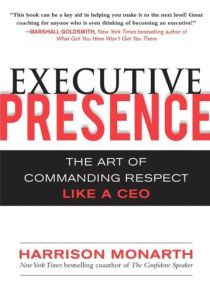
Executive Presence
Book

Executive Presence

The Art of Commanding Respect Like a CEO

McGraw-Hill, 2009 mais...

Buy the book


Editorial Rating

7

getAbstract Rating

  • Applicable

Recommendation

Why is the lion king of the jungle? The reasons, says business consultant and executive coach Harrison Monarth, are his “impressive mane” and “even more impressive roar.” Though other creatures may be smarter or even bigger, the lion has a special blend of true power and “an image and related behavior” that convey that power. In today’s business jungle, image matters, too. If you want to rise to the top of your firm, whether you are a lion or a lioness, you must craft and maintain an “executive presence” by combining superior communication skills with the ability to “read” people accurately and influence their perceptions. Explaining these techniques and more, Monarth’s ambitious work is dense with information and strives to cover a broad range of topics, some complex enough to warrant their own books. getAbstract recommends Monarth’s comprehensive advice to professionals who want to win the lion’s share of influence and power at their firms.

Summary

Always Selling

In the business world, talent alone won’t guarantee your success. Indeed, “not only what you know but how you manage perception” determines how high you will rise. To gain influence in your firm, build and maintain an “executive presence,” a personal image that inspires respect.

You might not think of yourself as a salesperson, but you are one. Whenever you attempt to persuade someone to see your point of view, you are selling. People can’t help but “pitch” their ideas, hopes, wants and needs to those around them. The pitch is at the heart of all “human interaction.” Ultimately, the success of your pitch depends on how your audience perceives you, not on your message, intent or any other factor.

What influences how someone interprets your message? People receive input through the five senses: sight, hearing, smell, touch and taste. To a degree, you can control what your audience members perceive through their senses, in that you can dress yourself a certain way, ensure that you smell nice, moderate your voice, and so forth. However, once people absorb information, they filter it through five corresponding categories of perception. According to ...

About the Author

Harrison Monarth is co-author of The Confident Speaker and founder and president of the GuruMaker School of Professional Speaking, an international consulting firm.


Comment on this summary

More on this topic

Related Skills

Karriere voranbringen
Talente gewinnen
Eigenes Wohlbefinden stärken
Karriere
Employee Experience verbessern
Entrepreneurship
Innovationskultur fördern
Foster Team Culture
Leads generieren und qualifizieren
Personalwesen
Kulturelles Bewusstsein entwickeln
Innovation
Ethisch führen
Strategisch führen
Unternehmenskommunikation managen
Performance managen
Management
Zusammenarbeit meistern
Content-Marketing einsetzen
Marketingstrategie entwickeln
Persönliche Entwicklung
Job suchen
Finanzierung sichern
Strengthen Team Collaboration
Berufliche Kompetenzen
Teamdynamik verstehen
Strategisch kommunizieren
Executive Leadership
Psychologische Sicherheit fördern
Kommunikationsstil anpassen
Intrapreneurship betreiben
Persönliche Reputation managen
Manage People and Talent
Schwierige Gespräche führen
Präsentieren als Vertriebler
Organisationen verstehen
Klar kommunizieren
Emotionen verstehen
Büropolitik meistern
Servant Leadership praktizieren
Soziale Signale erkennen
Mikroaggressionen verstehen
Business-Etikette beherrschen
Soft Skills
Von unten führen
Vertrieb
Mit Stakeholdern kommunizieren
Geschäftsidee pitchen
Persönlichkeitstypen verstehen
Gespräche führen
Sich selbst führen
Authentisch sein
Führungswirkung steuern
Prospects konvertieren
Emotionen regulieren
Führung
Arbeitgebermarke aufbauen
Personal Brand entwickeln
Emotionale Intelligenz entwickeln
Interkulturell kommunizieren
Rapport mit Prospects aufbauen
Empathie und Mitgefühl zeigen
Sich selbst verstehen
Branding aufbauen
Menschliches Verhalten verstehen
Wirksam kommunizieren
Aktiv zuhören
Selbstwahrnehmung entwickeln
Wandel von unten anstoßen
Unternehmens-Purpose kommunizieren
Unternehmensstrategie kommunizieren
Mitarbeiterbeziehungen managen
Mikroaggressionen vermeiden
Diskussionen moderieren
Andere beeinflussen
Grenzen setzen
Wirksam überzeugen
Öffentlich sprechen
Selbstbewusst auftreten
Navigate Leadership Challenges
Sozialverhalten verstehen
Kommunikation verstehen
Nonverbal kommunizieren
Storytelling meistern
Mit schwierigen Menschen umgehen
Soziale Kompetenzen entwickeln
Konflikte lösen