

Book
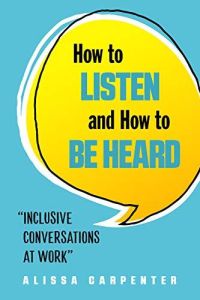
How to Listen and How to Be Heard
Inclusive Conversations at Work



扫码即可阅读分享此浓缩书
Recommendation
Companies with diverse, inclusive workplaces perform better. Their employees are more engaged and more productive. Workplace expert Alissa Carpenter explains how to improve your firm’s inclusivity. Her practical, applicable advice on handling challenging conversations, turning differences into strengths and overcoming bias is relevant to any manager. While some points may seem obvious – such as seeking opportunities to interact with your colleagues in person – they are also poignant reminders about the value of personal connection and perhaps about the potential of the hybrid in-and-out of the office model.
Summary
About the Author
Multigenerational workplace expert Alissa Carpenter owns Everything’s Not OK and That’s OK, where she provides training, consulting and speaking services.
Learners who read this summary also read
Related Skills

Kreativ sein

Emotionale Intelligenz entwickeln

Steigern Sie die Teamleistung

Innovationskultur fördern

Fördern Sie die Teamkultur

Personalwesen

Kulturelles Bewusstsein entwickeln

Innovation

Ethisch führen

Sich selbst führen

Führung

Gut leben

Change managen

Management

Soziale Kompetenzen entwickeln

Führen Sie Herausforderungen im Leadership

Persönliche Entwicklung

Unternehmenskultur beeinflussen

Soft Skills

Digitalkompetenz aufbauen

Berufliche Kompetenzen

Starke Beziehungen aufbauen

Transparent kommunizieren

Durch Change führen

Team motivieren

Diversity, Equity & Inclusion fördern

Neurodiversität fördern

Sozioökonomische Vielfalt fördern

Kreativ zusammenarbeiten

Virtuell zusammenarbeiten

Servant Leadership praktizieren

Klar kommunizieren

LGBTQ+-Inklusion fördern

Wirksam kommunizieren

Kommunikation verstehen

Menschen mit Behinderung inkludieren

Unconcious Bias verstehen

Verletzlichkeit zeigen

Kernwerte definieren

Minderheiten als Verbündeter unterstützen

Zusammenarbeit meistern

Digital kommunizieren

Praktiziere transformationale Führung

Mit schwierigen Menschen umgehen

Zugehörigkeitsgefühl fördern

Vertrauen gewinnen

Gender-Inklusion fördern

Generationenvielfalt fördern

Stärken Sie die Teamzusammenarbeit

Mikroaggressionen vermeiden

Ethnische Miinderheiten inkludieren

Psychologische Sicherheit fördern

Inklusiv führen

Inklusiv kommunizieren

Offene Kommunikation fördern

Mikroaggressionen verstehen

Funktionsübergreifend zusammenarbeiten

Inklusive Kultur schaffen

Comment on this summary