
Book
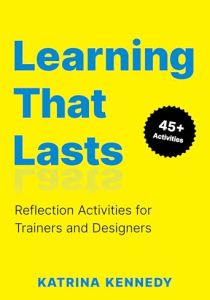
Learning That Lasts
Reflection Activities for Trainers and Designers


1×
Melden Sie sich an, um die Audiozusammenfassung anzuhören.
Recommendation
Reflection is a learning superpower. In this helpful guide, experienced trainer Katrina Kennedy explains how strategic pauses during virtual and in-person training sessions enable people to build on their prior knowledge, connect with other participants, retain what they learned, and improve their critical thinking skills. Kennedy provides sample reflection questions and step-by-step instructions for reflection activities, with options for individuals, small or large groups, and online gatherings. She offers both in-depth reflections and ones that take only a few minutes.
Summary
About the Author
Speaker and facilitator Katrina Kennedy has nearly 30 years’ experience in L&D and helps trainers create engaging learning experiences.










Comment on this summary