
Navigation überspringen
Making Innovation Work
Book

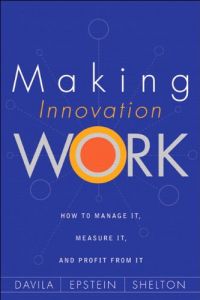
Making Innovation Work

How to Manage It, Measure It, and Profit From It

Wharton School Publishing, 2005 Mehr

Buy the book


Editorial Rating

9

getAbstract Rating

  • Innovative
  • Applicable

Recommendation

getAbstract recommends this book to everyone involved in innovation. Whether you're involved as a creative thinker, a promoter of new products, a manager guiding the innovation process or an investor evaluating an innovative company, there's gold here for you. Authors Tony Davila, Marc J. Epstein and Robert Shelton compress a mass of research and experience in innovation practices into a set of rules and guiding principles. Then, they use stories, lucid explanations, charts and careful definitions to illustrate how these principles work. A few of these concepts could have been expanded profitably - for example, how to tell in practice when radical innovation is needed, how to determine if you're innovating too much or too fast, and how to sort out the best ideas without discouraging the creators of the rejected concepts. That's the only caveat; everything else is fascinating and immediately applicable.

Summary

What Is Innovation?

Innovation is not revolutionary or magical, and not every company has to innovate a lot. Depending upon your industry, polishing existing processes might be enough. Three broad rules govern innovation. First, like other aspects of business, it requires specific conceptual tools, used with discipline. Second, to innovate profitably, you must measure and reward innovation. Third, to change your industry fundamentally, combine a business model change with a technological change.

Company leaders - who play the most vital role in innovation - must choose between a "Play-to-Win" (PTW) strategy and a "Play-Not-to-Lose" (PNTL) strategy. Once you determine your approach, guide innovation by using metrics and rewards, and by helping your organization learn.

What Kind of Innovation Fits Your Organization

Firms that innovate can prosper, and change society and their industries. Innovation isn't just for business; nonprofits can also apply it. Build the right portfolio of innovation by deciding what's appropriate for your firm, based on its nature and market position.

Innovation can be "incremental, semi-radical or radical." Incremental ...

About the Authors

Tony Davila, Ph.D., designs performance management systems and teaches at Stanford's Graduate School of Business. Marc J. Epstein, a veteran consultant, taught at Stanford, Rice University's Jones Graduate School of Management and INSEAD. Robert Shelton has been a vice president and/or managing director at three major consultancies.


Comment on this summary

  • Avatar
  • Avatar
    F. U. 1 year ago
    Efficiency, effectiveness, resource utilization, increased results, cost reduction, all boil down to a successful flowchart. Surprisingly, I am interested in this book.
  • Avatar
    B. N. 4 years ago
    structure of innovation system should
    efficiency, communication, coordination, learning and alignment. Efficiency moves innovations quickly from ideas to the market.
  • Avatar
    A. M. 7 years ago
    could I get it Free ?

More on this topic

Related Skills

Karriere voranbringen
Anpassungsfähigkeit steigern
Produktiver werden
Karriere
Unternehmen entwickeln
Besser denken
Digitale Transformation
Fertigungsbranche
Drive AI Transformation
Enable Digital Organization
Entrepreneurship
Execute Digital Operations
Personalwesen
Strategisch führen
Gut leben
Unternehmenskommunikation managen
Manage Learning and Development
Manage People and Talent
Vergütung managen
Teams und Abteilungen managen
Markt-Insights nach Branchen
Marketing
Persönliche Entwicklung
Soft Skills
Nachhaltigkeit
Organisationen verstehen
Berufliche Kompetenzen
Denken verstehen
Executive Leadership
Produktinnovation managen
AI Transformation
Build Digital Culture
Unternehmensperformance steigern
Nachhaltig innovieren
Open Innovation anwenden
Produktion optimieren
Ideenfindung moderieren
Ideen entwickeln
Anreizsysteme gestalten
Operative Planung leiten
Annahmen hinterfragen
Drive Team Performance
Strengthen Team Collaboration
Psychologische Sicherheit fördern
Produktentwicklung vorantreiben
Product-Market Fit herstellen
Zusammenarbeit meistern
Ideen auswählen
Kreativität verstehen
Lernen verstehen
Social Learning nutzen
Kreativität fördern
Innovation Fallstudien
Neue Ideen vorantreiben
Offene Kommunikation fördern
Führung
Ambidextrie nutzen
Aus Fehlern lernen
Wissensmanagement betreiben
Positive Fehlerkultur fördern
Funktionsübergreifend zusammenarbeiten
Geschäftsmodelle entwerfen
Interne Kommunikation managen
Unternehmenskultur beeinflussen
Innovationskultur fördern
Strategie umsetzen
Employee Experience verbessern
Innovative Produkte entwickeln
Intrapreneurship betreiben
Design Thinking anwenden
Kreativ zusammenarbeiten
Employee Engagement steigern
Organisation agil machen
Kreativ sein
Intellektuelles Kapital managen
Fertigungsbranche Best Practices
Experimentieren fördern
Innovation
Lean Startup anwenden
Foster Team Culture
Organize for AI
Motivation verstehen
Arbeitsabläufe straffen
Aus Erfahrung lernen
Neugierig sein
Lebenslang lernen
Kontinuierliche Verbesserung vorantreiben
Produktion und Logistik
Selbstgesteuert lernen
Management
Innovation organisieren
Lernkultur schaffen
Innovation verstehen
Strategisch innovieren
Growth Mindset entwickeln
Lerngewohnheit entwickeln
Mitarbeiterbeiträge belohnen
Betriebliches Lernen verstehen