
Navigation überspringen
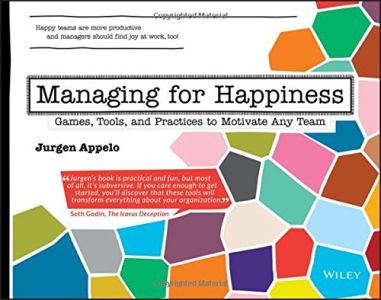
Managing for Happiness
Book

Managing for Happiness

Games, Tools, and Practices to Motivate Any Team

Wiley, 2016 Mehr

Buy the book


Editorial Rating

8

getAbstract Rating

  • Applicable

Recommendation

Management expert Jurgen Appelo offers a unique formula for making your organization vibrant and productive. Appelo shows you how to put his advice into practice. Instead of focusing on theoretical approaches to building motivation and contentment, he provides games and exercises that you can implement. The playful layout of his pages may enthrall you – or drive you crazy. Yet wisdom, common sense and solutions any organization can use lurk within the busy graphics and comic book format. This is solid HR advice for someone new to the field or anyone who appreciates having it packaged so cleverly, but it’s not news to experienced practitioners. getAbstract recommends Appelo’s sound management philosophy and hands-on techniques for boosting excellence, productivity and morale to entrepreneurs, executives, HR professionals and managers at every level.

Summary

“Management 1.0”

Traditional management philosophy focuses on changing employees’ attitudes and behavior. It posits that leaders are responsible for improved company functionality and for motivating workers to achieve greater productivity. In a Management 1.0 environment, managers identify and assist or replace underperforming employees. Corporate policy encourages competition and gives awards for individual achievement. Managers distrust employees, and may monitor their computer use to ensure they put in an honest day’s work.

“Management 2.0”

A Management 2.0 culture acknowledges that employees are important assets, and managers must embrace “servant leadership” to move their organizations forward. Leaders with honorable motives organize 360-degree feedback exercises and hold one-on-one sessions with employees to set individual goals. Though this is a vast improvement over Management 1.0, both styles depend on a “top-down” philosophy. Management 2.0 still uses targets and metrics to govern an entire corporate system when, in reality, performance takes place in the relationships between departments and individuals. Both Management...

About the Author

Leadership expert and speaker Jurgen Appelo is CEO of the global business network Happy Melly. He originated the Management 3.0 workshops.


Comment on this summary

  • Avatar
  • Avatar
    F. U. 1 year ago
    Keeping the workplace more attractive and motivating empowers every employee. The reading generates new ideas for implementing modern management designed to improve employee satisfaction and overall team performance. A Happy and Productive Team offers practical strategies for managers to improve their leadership skills.
  • Avatar
    A. S. 8 years ago
    Great summary. All the managers should read it.
  • Avatar
    C. G. 8 years ago
    It will work if only have support from the Top.

More on this topic

Related Skills

AI Transformation
Emotionale Intelligenz entwickeln
Anpassungsfähigkeit steigern
Wirksam kommunizieren
Innovative Produkte entwickeln
Develop Team Members
Entrepreneurship
Executive Leadership
Personalwesen
Ethisch führen
Strategisch führen
Sich selbst führen
Führung
Leverage AI in Your Daily Tasks
Unternehmenskommunikation managen
Vergütung managen
Teams und Abteilungen managen
Management
Marketing
Zusammenarbeit meistern
Soziale Kompetenzen entwickeln
Mitarbeiterleistung steigern
Talente strategisch einsetzen
Diversity, Equity & Inclusion fördern
Berufliche Kompetenzen
Persönliche Entwicklung
Zugehörigkeitsgefühl fördern
Neue Ideen vorantreiben
Mentor sein
Sinn finden
Manage Learning and Development
Psychologische Sicherheit fördern
Eigenverantwortung fördern
Employee Experience verbessern
Kundenorientierung fördern
Selbstwahrnehmung entwickeln
Soft Skills
Herausforderungen annehmen
Work Remotely
Use AI for Learning and Upskilling
Kreativ zusammenarbeiten
Drive Team Performance
Dankbarkeit üben
Motivation verstehen
Sich selbst motivieren
Eigenen Purpose finden
Servant Leadership praktizieren
Eigenes Wohlbefinden stärken
Verletzlichkeit zeigen
Mitarbeiter beurteilen
Demut üben
Teamzusammenhalt stärken
Positive Fehlerkultur fördern
Learning Experiences gestalten
Lernen verstehen
Resilienter werden
Team motivieren
Positiv denken
Teamleistung verbessern
Foster Team Culture
Manage People and Talent
Kreativität fördern
Mitarbeiterwohlbefinden stärken
Mentale Gesundheit verbessern
Gut leben
Menschen coachen
Performance managen
Kreativ sein
Anreizsysteme gestalten
Innovation
Unternehmenskultur beeinflussen
Authentisch sein
Work-Life-Balance finden
Neugierig sein
Aus Feedback lernen
Feedback geben
Growth Mindset entwickeln
Mitarbeitergespräche durchführen
Experimentieren fördern
Social Learning nutzen
Flexible Arbeitszeitmodelle anbieten

Unternehmens-Purpose kommunizieren
Lebenslang lernen
Selbstgesteuert lernen
Innovationskultur fördern
Lerngewohnheit entwickeln
Unternehmenskultur verstehen
Aufgaben delegieren
Mitarbeiterbeiträge belohnen
Lernkultur schaffen